

Sustainability · 2025
In this section52 topics
- Sustainability Policy4 items
- Sustainability Goals & UN SDGs3 items
- Policy Review3 items
- Business Value Chain1 item
- Stakeholder Analysis1 item
- Environmental Policy & Guidelines5 items
- Environmental Policy Review3 items
- Energy — Plan & Guidelines2 items
- Energy — Electricity Consumption1 item
- Energy — Fuel Consumption1 item
- Energy — Targets2 items
- Energy — Performance & Outcomes2 items
- Water — Plan & Guidelines2 items
- Water — Withdrawal, Discharge & Consumption1 item
- Water — Targets2 items
- Water — Performance & Outcomes2 items
- Waste — Plan & Guidelines2 items
- Waste — Generation, Disposal & Recycling1 item
- Waste — Targets2 items
- Waste — Performance & Outcomes2 items
- GHG — Plan & Guidelines2 items
- GHG — Emissions1 item
- GHG — Emissions Verification1 item
- GHG — Principles & Standards1 item
- GHG — Targets1 item
- GHG Targets — Carbon Neutrality1 item
- GHG Targets — Other Targets1 item
- GHG — Performance & Outcomes2 items
- Environmental Legal Incidents1 item
- Other Environmental Management1 item
- Social Policy & Guidelines5 items
- Social Policy Review3 items
- Social — Principles & Standards Practised1 item
- Human Rights Due Diligence4 items
- Employees — Plan & Guidelines5 items
- Employees — Workforce1 item
- Employees — Remuneration & Provident Fund1 item
- Employees — Training & Development1 item
- Employees — Occupational Health & Safety1 item
- Employees — Labour Relations1 item
- Employees — Employee Representation2 items
- Employees — Targets2 items
- Employees — Performance & Outcomes2 items
- Customers — Plan & Guidelines3 items
- Customers — Satisfaction Results1 item
- Customers — Targets2 items
- Customers — Performance & Outcomes2 items
- Community & Social — Plan & Guidelines3 items
- Community & Social — Targets2 items
- Community & Social — Performance & Outcomes2 items
- Other Social Management1 item
- Law Violation Incidents1 item
Sustainability Policy
Has a Sustainability Policy
Yes
Policy Description
Sustainable Development Policy
Amata Corporation Public Company Limited, its associated companies, subsidiaries, and affiliates (the Company) are well aware that business development to grow while coexisting with and responsible for the local community, as well as the preservation of natural resources and a sound environment based on good corporate governance, will help create long-term value for the organization and stakeholders throughout the value chain. Therefore, the Company is committed to conducting business in accordance with the principles of sustainable development and the “ALL WIN” philosophy under the principles of corporate governance and the Company’s business code of conduct, as well as complying with the guidelines of the UN Global Compact as well as relevant international practices and standards. This is executed by integrating sustainability management guidelines with the Company’s business strategy and operations to drive the sustainable development of the organization in a concrete manner with the goal of developing the business to grow steadily, increase competitiveness, reduce the negative impact of business operations, and create a positive impact on the economy, the environment, and society. It is also able to meet the expectations of all stakeholders in a balanced manner and support the achievement of the United Nations Sustainable Development Goals (SDGs).
Definitions
Sustainable development refers to development that meets the needs of the current generation without depriving them of the ability to meet the needs of future generations. The ultimate goal of this concept is to improve the quality of life of the world’s population while maintaining the level of human use of natural resources that does not exceed the production potential of nature and focusing on the balance between the economy, society, and the environment by taking the next generation into account.
Practices
The Company has established guidelines for setting strategies and operational goals in alignment with the principles of sustainable development that aim to create a balance between the economy, society, and the environment throughout the value chain under the principles of good corporate governance and the business code of conduct. The guidelines that should be followed are as follows:
1. Leadership Commitment
The Company demonstrates the commitment of the top management in formulating the strategy, sustainability management framework, and short-, medium-, and long-term corporate strategic goals that are consistent with the international principles of sustainability and sustainable development goals to guide practices and drive the concrete implementation of the whole organization. The Company continuously monitors various situations, prepares for changes, and consistently supervises operations to be efficient, as well as building a strong corporate culture and behaving as a good role model, including cooperating or supporting Thai and international organizations or agencies in driving business towards sustainability.
2. Business operation with integrity based on the corporate governance principles
The Company operates with integrity, transparency, and fairness, adheres to applicable laws, regulations, policies, guidelines, and standards, and upholds the tenets of corporate governance and business ethics to combat corruption, prevent conflicts of interest, and respect intellectual property. The Company also respects and adheres to human rights principles, treats workers fairly, discloses information transparently, conducts socially and environmentally responsible business, and treats all stakeholders equally. Besides, the Company cultivates an ethical culture in the organization and systematically implements the ethics and compliance program by adequately providing an effective mechanism for supervision, risk management, audits, and internal controls.
3. Increase in business value with innovation and quality
The Company continues to improve its work processes and improve the quality of products and services throughout the product life cycle efficiently with technology and innovation, while promoting innovation and developing new businesses that create added value for the organization and stakeholders by taking into account the long-term impact covering issues related to stakeholders, society, and the environment in the value-creating process of the Company. It also invests in innovative new businesses for sustainability and supports innovation with suppliers and business partners to increase competitiveness, generate continuous growth of turnovers, and provide good returns for shareholders and stakeholders.
4. Treatment of employees in accordance with human rights principles
The Company respects the rights and treats employees and workers in accordance with human rights principles. It encourages teamwork, respect for differences, diversity, and inclusion. The Company does not use forced labor in any form and treats employees and workers fairly and equally without discrimination in the processes of recruitment, selection, appointment, and provision of welfare and remuneration, transfer, as well as performance evaluation and dismissal. The Company also creates a good working environment that adheres to international standards for quality, safety, occupational health, and overall workplace conditions, builds a strong corporate culture and values, and continuously develops the knowledge, skills, and potential of its personnel to create opportunities for advancement in work and prepare for changes. In addition, the Company respects the privacy rights and protects the personal information of employees to be secure and safe.
5. Promotion of participation and consideration for all stakeholders
The Company is committed to reducing the negative impact of business operations that occur or may occur to stakeholders, both inside and outside the organization, by providing channels for expressing opinions, complaints, or whistleblowing and the transparent and fair process of handling complaints from stakeholders, as well as creating participation and engagement with stakeholders through various means to manage the interests, concerns, and expectations of stakeholders. The Company strives to minimize or eliminate direct and indirect negative impacts on stakeholders by comprehensively assessing risks and responsibly managing all types of risks in the supply chain in accordance with international standards, as well as developing employees, suppliers, business partners, and key stakeholders to have the knowledge and skills to support sustainable business operations to create sustainable opportunities and benefits for all stakeholders.
6. Care for and protection of the environment
The Company encourages executives and employees at all levels to be aware of the risks and environmental impacts caused by business operations on water, air, ecosystems, and biodiversity, including climate change. It conducts business by promoting the most efficient use of natural resources, increasing the ability to manage natural resources sustainably, fostering the use of renewable energy and clean energy, creating innovations or environmentally friendly new businesses, and reducing the impact of operations on the environment, including adapting to climate change. The Company controls and manages greenhouse gas emission reduction, waste emission reduction, and the use of chemicals that are harmful to the environment throughout the supply chain in line with international practices. This includes creating awareness of working with responsibility towards the environment and encouraging stakeholders to jointly care for the environment, preserve, and restore ecosystems and biodiversity.
7. Promotion of the development of the quality of life of people in society
The Company respects the rights of the community and promotes a good quality of life for workers in the operating area and the community, including supporting equal access to resources and utilizing resources in the community with appreciation. It also takes responsibility for managing risks and negative impacts on communities resulting from business activities along the supply chain, as well as caring for and improving community quality of life through projects and activities that enable opportunity to listen to feedback. Moreover, the Company encourages stakeholders to participate in its operations and create shared value by using the organization’s capabilities to help develop society and create equal opportunities for all groups of people in society. The Company cooperates with the government sector, the private sector, and civil society to develop the potential of communities to be strong and sustainable.
Duties and Responsibilities
The sustainable development policy is the responsibility of the Board of Directors and management to jointly drive the Company’s sustainable development to achieve its goals, and employees at all levels are responsible for supporting and actively following the policy and implementing it as a part of all work processes to achieve these objectives in a concrete manner and implementing the policy throughout the organization with clear supervision. Therefore, the Company has defined the duties and responsibilities of individuals or departments within the organization as follows:
Board of Directors
1) Consider approving and reviewing sustainable development policies and frameworks to be up to date and appropriate to the environment and risk factors, including business activities and stakeholders across the value chain, at least once a year.
2) Supervise business operations to be in line with relevant laws, rules, regulations, policies, and guidelines, as well as encourage concrete implementation of this policy.
3) Support the management in assessing risks in all dimensions that affect sustainable development and formulate effective, appropriate, and adequate risk control measures.
4) Consider reports on risks and performance of sustainable development policies and guidelines, and provide constructive recommendations to the management for development and improvement.
5) Consider urgent issues related to sustainable development to supervise and ensure timely operations.
6) Encourage and support the executives in recognizing and prioritizing sustainable development and cultivating it as a corporate culture.
Executives
1) Provide criteria, procedures, and guidelines for sustainable development that are appropriate for each company’s context and in accordance with the policies, procedures, and laws of countries in which the Company operates business.
2) Establish an organizational structure with responsible individuals and clear responsibilities and roles while allocating appropriate and adequate resources.
3) Define interrelated objectives, goals, strategies, plans, and indicators for sustainable development, including business continuity management.
4) Adequately arrange for the development and review of effective risk management system, internal controls, and internal audit.
5) Monitor, supervise, manage, and support employees, suppliers, business partners, and key stakeholders to comply with relevant laws, policies, measures, and procedures in all dimensions, as well as developing and improving practices to be more effective.
6) Act as a good role model by avoiding any activity that may lead to situations or suggestions that could result in policy violations.
7) Raise awareness and promote a culture of sustainable development by continuously communicating to employees at all levels and relevant stakeholders.
8) Consider the report on the performance of the policy before presenting it to the Board of Directors.
9) Provide channels for whistleblowing and receiving complaints about violations of
the sustainable development policy, including the complaint handling process and protection measures for whistleblowers, complainants, witnesses, and information reporters.
Departments or Individuals Responsible for Sustainable Development
1) Develop strategic plans, action plans, and measures for sustainable development that are clear and consistent with the context of the business.
2) Establish a clear, transparent, and verifiable process for disclosing and reporting information on sustainable development.
3) Assess and manage risks in the economic, social, environmental, and corporate governance dimensions, including determining risk control and management measures, as well as having guidelines for preventing and mitigating impacts.
4) Develop internal control, risk management, and policy compliance monitoring to be effective and concise, as well as informing and following up with relevant departments for regular improvement and correction.
5) Regularly monitor, collect data, and prepare reports on sustainable development, as well as managing information disclosure to stakeholders throughout the value chain on an annual basis and in accordance with the requirements of regulatory authorities.
6) Report the performance of the management of significant issues related to sustainable development to the executives on a regular basis and report immediately when abnormal incidents occur.
7) Coordinate and integrate cooperation with relevant individuals, agencies, or stakeholders to jointly establish measures, management, and mechanisms for control, response, and problem solving.
8) Continuously communicate with employees and related stakeholders to raise awareness and promote participation in sustainable development.
9) Provide initial suggestions on the implementation of the policy, as well as coordinate or discuss with other relevant departments to ensure that the suggestions are correct, complete, and clear.
10) Report the results of the policy compliance to the Board of Directors, executives, or relevant agencies.
11) Review sustainable development policies in accordance with relevant laws, regulations, guidelines, and standards.
Employees
1) Learn, understand, and comply with laws, rules, regulations, policies, and guidelines, including relevant standards.
2) Communicate and transfer knowledge about the Company’s sustainable development policies and goals to business partners, suppliers, contractors, customers, and local communities.
3) When someone is found to have committed an offense or committed an act that violates this policy, the information or complaint must be reported through the Company’s whistleblowing channels.
Communication and Training
The Company communicates with the directors, executives, employees, subsidiaries, associated companies, other companies that the Company has the power to control, business representatives, and suppliers, as well as stakeholders involved in sustainable development policies and organizational goals, through training, orientation, meetings, or activities in various appropriate forms, as well as evaluating their effectiveness and making continuous improvements.
Whistleblowing
Those who see an action that qualifies as a violation of this policy must complain or report it according to the procedures of the whistleblowing policy. The complainant or whistleblower will be protected, and the information will be kept confidential without impacting their position or compensation, both during the investigation and after the completion of the process.
Penalty
The sustainable development policy is considered part of the operational discipline. Directors, executives, and employees who do not comply will be investigated and disciplined in accordance with the Company’s regulations, charters, and applicable laws. This may include termination of employment. In the event of an investigation, all employees must fully cooperate with internal and external agencies. In the meantime, the Company will not demote, punish, or adversely affect directors, executives, and employees who reject actions intended to violate this policy, even if such actions cause the Company to lose business opportunities.
Policy Document Link
https://investor.amata.com/storage/content/corporate-governance/corporate-governance-and-download/social/amata-sustainable-development-policy-en.pdf
Page Number in Report
1-8
Sustainability Goals & UN SDGs
Has Sustainability Goals
Yes
Goals Description
The Company embeds sustainability at the core of its governance and strategic direction, ensuring a structured and accountable approach across all levels of the organization. The Board of Directors, executives, and employees play an active role in driving economic, social, environmental, and human rights progress, fostering a corporate culture that integrates sustainability into decision-making and business operations. The Company recognizes that visionary leadership, strong corporate governance, and transparent management are critical to continuous development and long-term value creation. By fostering a culture of accountability and responsibility among executives and employees, the Company drives continuous growth while ensuring sustainable value deliverables for all stakeholders.
AMATA Sustainability Development Strategies and Goals
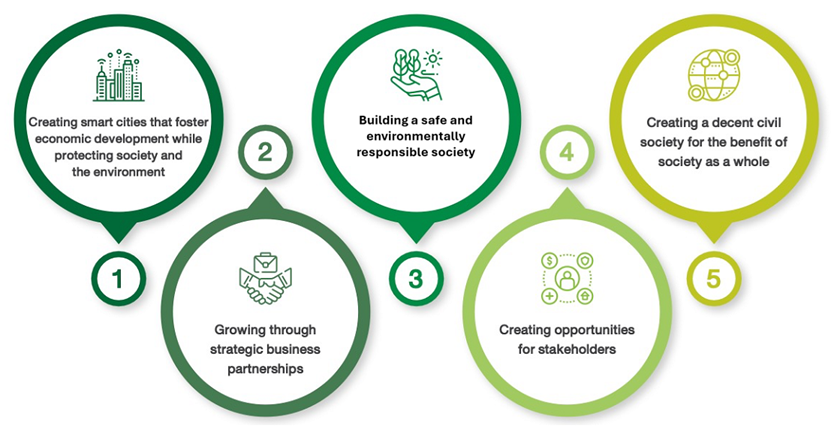
1st Strategy: Creating smart cities that foster economic development while protecting society and the environment | |
Transitioning from its traditional role as an industrial estate developer, which served as a manufacturing base for global industries, to a leading smart city developer in Thailand’s Eastern Region. This transformation aims to better meet the needs of 12 targeted industries in the Eastern Economic Corridor (EEC) and preparing for the new industry. Through this shift, the Company seeks to create value for stakeholders, society, and the environment while strengthening its unique positioning and competitive advantage. | |
Corporate Goals | AMATA’s Strategic Directions |
|
|
2nd Strategy: Growing through strategic business partnerships | |
Developing new smart city-related businesses to rapidly address customer needs and expectations while ensuring sustainable and high-quality growth. This will be achieved through strategic investments with leading and reputable business partners who bring expertise across various industries. These collaborations will drive innovation, delivering high-value products and services that effectively meet customer demands, generate additional revenue streams, and mitigate risks associated with the core business. | |
Corporate Goals | AMATA’s Strategic Directions |
|
|
3rd Strategy: Building a safe and environmentally responsible society | |
Prioritizing stakeholder safety and taking responsibility for any negative impact on the environment by encouraging efficient resource and waste management among members of the industrial estates and surrounding communities. Developing innovative processes to minimize negative social and environmental impacts and aim to develop new businesses that use natural resources and energy more efficiently. | |
Corporate Goals | AMATA’s Strategic Directions |
|
|
4th Strategy: Creating opportunities for stakeholders | |
Developing businesses in the present and future that can benefit and create opportunities for various stakeholders both within and outside the organization. This includes providing opportunities for employees to develop their skills and advance in their careers, as well as ensuring that people within and outside the industrial estate have access to high-quality products and services to improve their quality of life and opportunities for growing local economy. | |
Corporate Goals | AMATA’s Strategic Directions |
|
|
5th Strategy: Creating a decent civil society for the benefit of society as a whole | |
Fostering a supportive and harmonious society is an essential part of driving sustainable business for the Company. This involves creating a positive community within the Company, including employees who are the main resource for leading organizational success, as well as building external communities such as customer groups in industrial estates, surrounding communities, and local governments. This aims to promote cooperation among them in various activities to achieve collective impact that benefits society as a whole. | |
Corporate Goals | AMATA’s Strategic Directions |
|
|
UN Sustainable Development Goals
| SDG Goal |
|---|
| Goal 1 No Poverty |
| Goal 3 Good Health and Well-being |
| Goal 4 Quality Education |
| Goal 6 Clean Water and Sanitation |
| Goal 7 Affordable and Clean Energy |
| Goal 8 Decent Work and Economic Growth |
| Goal 9 Industry, Innovation and Infrastructure |
| Goal 10 Reduce Inequalities |
| Goal 11 Sustainable Cities and Communities |
| Goal 12 Responsible Consumption and Production |
| Goal 13 Climate Action |
| Goal 15 Life on Land |
| Goal 16 Peace, Justice and Strong Institutions |
| Goal 17 Partnerships for the Goals |
Policy Review
Policy Reviewed This Year
Yes
Policy Changed This Year
No
Review Details
The Company has reviewed its sustainability management policy, and no material changes were made to the policy.
Business Value Chain
Value Chain Description
Stakeholder impact management in business value chain
The Company recognizes the impacts of its operations and has identified and assessed both positive and negative effects on the economy, society, and environment throughout the value chain, including potential human rights impacts on stakeholders. This enables the Company to effectively manage material topics with significant impacts responsibly and sustainably.
The Company categorizes stakeholders within its value chain into 9 groups based on the revised stakeholder definition under the GRI Universal Standards 2021. Stakeholders are defined as individuals or groups who are affected or may be affected by the Company's operations. These groups include employees, shareholders, customers, communities, suppliers and contractors, business partners, creditors, government agencies, and competitors. For further classification, the Company divides stakeholders into internal stakeholders, consisting of employees, and external stakeholders, which include shareholders, customers, communities, suppliers and contractors, business partners, creditors, government agencies, and competitors.
The Company prioritizes its stakeholders by considering the extent of impacts arising from the Company’s operations on stakeholders across economic, social, environmental, and human rights dimensions, or as well as the level of stakeholders’ interest and expectations toward the Company, together with the degree of influence or impact that stakeholders may have on the Company’s operations and its ability to achieve its objectives. This prioritization is used to determine appropriate approaches for stakeholder engagement and to support action planning tailored to each stakeholder group.
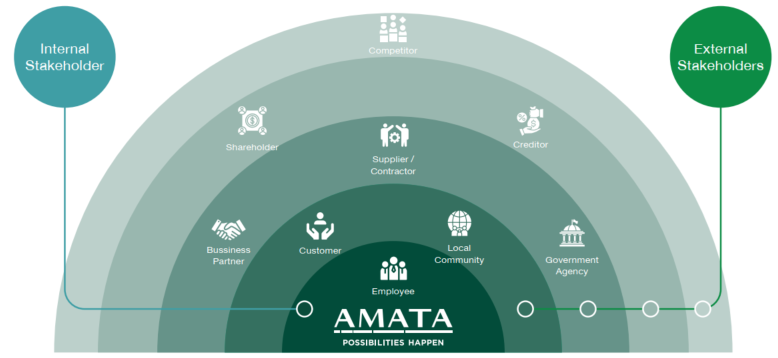
Stakeholder Analysis
Stakeholder Analysis
| Stakeholder Type | Stakeholders | Stakeholder Expectations | Response to Expectations | Communication Activities |
|---|---|---|---|---|
| Internal stakeholders | 2921 · Description: Employees | - Appropriate compensation and welfare
- Fair performance evaluation
- Job security and career advancement
- Good working environment and atmosphere
- Development of an employee’s capability, knowledge, and ability
- Health and Safety at Work
| - Provided proper compensation and welfare
- Improved efficiency and transparency of performance evaluation
- Promoted employee’s advancement in various positions and fields within the AMATA Group
- Provided adequate working equipment and promoted a safe and happy working environment
- Improved the workplace environment by ensuring cleanliness and proper organization, providing a recreation room for employees to relax, and equipping the space with exercise facilities.
- Organized training courses to meet business needs and adapt to a changing world
- Assessed the occupational health and safety risks of each position, and put corrective and preventive measures in place
- Provided professional medical consultants to give health advice to employees
| 2941 · Description: Online Communication · 2942 · Description: Internal Meeting · 2945 · Description: Complaint Reception · 2946 · Description: Employee Engagement Survey · 2949 · Other name: Annual meeting between top executives and employees · Description: Others · 2949 · Other name: Monthly CEO Day Meeting · Description: Others |
| External stakeholders | 2923 · Description: Customers | - High-quality after-sales services
- Customer relationship management
- Solving traffic and road safety issues
- Compliance with environmental laws, such as wastewater and solid waste management
- Water security within the industrial estates
- Promoting the use of renewable energy in the industrial estates
- Risk and emergency management in the industrial estates
- Maintaining business confidentiality
- Information on greenhouse gas emissions per product unit of utilities within the industrial estates
| - Enhanced the after-sales service team’s ability to provide one-stop services to customers
- Organized activities to support customers' operations, such as training programs for customers to keep up with worldwide trends and current affairs, as well as the capability to operate a company in compliance with changing legal requirements
- Improved communication channels, complaint handling processes, and management to respond to customer complaints efficiently
- Collaborated with the public and private sectors to solve traffic problems and develop traffic management technology
- Improved road surfaces and accident-prone locations
- Provided high-quality waste management services in accordance with environmental laws
- Disclosed operation data in a transparent manner
- Ensured industrial water users have access to secure water by expanding internal reservoirs in the industrial estates and implementing sustainable water management systems
- Generated renewable energy in the Company's areas
- Encouraged the use and production of renewable energy in the factories
- Assessed and managed risks in all aspects, practiced emergency drills, as well as provided competent personnel and necessary tools and equipment sufficient for the area's size and the number of factories in the industrial estates
- Strictly adhered to the Company’s policies and business ethics
- Publicly disclosed information on the Company's greenhouse gas emissions and its improvements to reduce greenhouse gas emissions
| 2941 · Description: Online Communication · 2943 · Description: External Meeting · 2945 · Description: Complaint Reception · 2947 · Description: Satisfaction Survey · 2949 · Other name: Marketing and customer relations activities · Description: Others · 2949 · Other name: Meeting with AMATA’s employees and meeting with customers directly · Description: Others |
| External stakeholders | 2902 · Description: Community | - High-quality after-sales services
- Customer relationship management
- Solving traffic and road safety issues
- Compliance with environmental laws, such as wastewater and solid waste management
- Water security within the industrial estates
- Promoting the use of renewable energy in the industrial estates
- Risk and emergency management in the industrial estates
- Maintaining business confidentiality
- Information on greenhouse gas emissions per product unit of utilities within the industrial estates
| - Collaborated with the public and private sectors to solve traffic problems and develop traffic management technology
- Organized joint activities with local communities to raise awareness and strengthen community‑based safety networks in the surrounding areas
- Developed and enhanced the capacity of the water reclamation system to reduce the dependence on natural surface water
- Collaborated with communities on water conservation and upstream ecosystem restoration projects
- Arranged an on-site visit to the AMATA industrial water management learning center to gain the trust of the local communities
- Promoted water conservation and its value among youth through community engagement activities like ‘Khru Arsa’ (volunteer teacher), to raise awareness and understanding and the AMATA Youth for Environmental Conservation initiative
- Disclosed waste management information in a transparent manner
- Encouraged factory operators in the industrial estates to manage waste properly and efficiently
- Developed projects to protect and restore ecosystems in the connecting areas
- Strictly complied with environmental laws and regulations
- Encouraged and kept monitoring the factory operators in the industrial estates to strictly comply with environmental laws
- Created and supported projects that improve the quality of life and the economy of local communities and society such as promoting vocational development and enhancing local products to meet recognized standards, while expanding and diversifying market access channels
- Encouraged and provided opportunities for people in local communities to access education and skill development
- Created a collaborative network with other stakeholders to jointly develop local communities and society at large
- Set up committees with representatives from local communities to express their opinions and acknowledge the Company's performance in managing social and environmental impacts
- Provided easily accessible communication channels and responded to community complaints efficiently
- Notified the communities about the industrial estates’ emergency response plan and safety measures
- Educated and enhanced community capabilities to cope with various emergency situations
| 2941 · Description: Online Communication · 2942 · Description: Internal Meeting · 2945 · Description: Complaint Reception · 2947 · Description: Satisfaction Survey · 2949 · Other name: Organizing public hearings and various committee meetings with the Company · Description: Others · 2949 · Other name: Organizing community relations activities · Description: Others · 2949 · Other name: Annual and activity-based satisfaction survey of communities surrounding the industrial estates · Description: Others |
| External stakeholders | 2899 · Description: Suppliers · 2918 · Description: Contractors | - Long-term business partnership
- Fair business practices
- A fair and transparent procurement process
- Supplier and contractor development
| - Communicated with strategic suppliers and contractors regarding the Company’s performance and future business direction, and developed mutually beneficial business objectives
- Complied with all applicable laws and regulations, including the procurement and anti-corruption policies
- Conducted a transparent, equitable, and fair procurement process
- Implemented supplier development projects, including digital technology training to improve data management, and working systems for suppliers and contractors, as well as new legislation
| 2941 · Description: Online Communication · 2943 · Description: External Meeting · 2945 · Description: Complaint Reception · 2949 · Other name: Meetings with suppliers and contractors · Description: Others · 2949 · Other name: Supplier and contractor’s assessment · Description: Others |
| External stakeholders | 2900 · Description: Business partners | - Integrity, fairness, and transparency in business
- Business confidentiality
| - Adhered to the code of business ethics
- Developed a fair joint venture agreement in a transparent manner
- Securing and maintaining the confidentiality of business partner information
| 2941 · Description: Online Communication · 2942 · Description: Internal Meeting · 2945 · Description: Complaint Reception · 2949 · Other name: Meetings of the Boards of Directors of Subsidiaries and Affiliated Companies · Description: Others · 2949 · Other name: Meetings with business partners and investors · Description: Others |
| External stakeholders | 2931 · Description: Government agencies and Regulators | - Compliance with laws and regulations
- Management of social and environmental impacts of the Company's operations
- Good Corporate Governance
- Creating economic and social value
- Disclosure of the Company’s performance
- Disclosure of corporate greenhouse gas emissions
| - Strictly complied with relevant laws and regulations
- Regularly monitored social and environmental impacts and timely submitted reports to government agencies
- Developed work processes or implemented corrective actions to reduce the social and environmental impacts of the Company’s operations, in accordance with the specified measures
- Carried out business in a transparent manner and adhered to the corporate governance policy
- Governed to ensure compliance with established policies, rules, and regulations
- Engaged with local communities and authorities and supported social and environmental development
- Disclosed financial and sustainability performance transparently through various channels, such as timely submissions to government agencies and public disclosure
- Disclosed corporate greenhouse gas emissions data that was verified by accredited organizations
| 2941 · Description: Online Communication · 2943 · Description: External Meeting · 2949 · Other name: Meeting with government agencies on various agendas · Description: Others · 2949 · Other name: Participating in various projects organized by the government sectors · Description: Others · 2949 · Other name: Participating in various working committees of government agencies · Description: Others · 2949 · Other name: Site visits · Description: Others · 2949 · Other name: Disclosure or reporting as required · Description: Others |
| External stakeholders | 2913 · Description: Shareholders | - Profitable and good performance
- Business growth
- Transparent and verifiable disclosure of the Company’s performance
- Good Corporate Governance
- Effective risk management
| - Developed new businesses to generate long-term revenue
- Developed innovation and technology in the production, services, and work processes that improve efficiency and cost management
- Reported business performance and financial status with transparency, completeness, accuracy, and timeliness
- Strictly complied with laws and regulations
- Conducted business transparently while adhering to good governance and anti-corruption
- Improved the system of governance, risk management, and compliance (Governance-Risk Management- Compliance System) to connect and work together efficiently and effectively
- Implemented a risk management process covering economic, social, environmental, and human rights aspects
| 2941 · Description: Online Communication · 2944 · Description: Annual General Meeting (AGM) · 2945 · Description: Complaint Reception · 2949 · Other name: Subsidiaries’ and associated companies’ shareholders' meetings · Description: Others · 2949 · Other name: Investor Roadshow · Description: Others · 2949 · Other name: SET Opportunity Day · Description: Others · 2949 · Other name: Quarterly Investor Meetings · Description: Others |
| External stakeholders | 2894 · Description: Creditor | - Compliance with applicable laws and regulations, as well as the terms and conditions set forth in the loan agreement and debenture
- Effective risk management
- Managing an appropriate capital structure
- On-time debt payments
| - Strictly followed the terms and conditions of the loan agreement and debenture
- Disclosed accurate and complete financial information
- Implemented a risk management process covering economic, social, environmental, and human rights aspects
- Established key internal controls for accounts payable, including accounts payable reconciliation, segregation of duties between posting accounts payable and making creditors’ payments, as well as preparing corresponding letters confirming creditor balances for each accounting period
- Refrained from collaborating with or supporting any individuals or organizations involved in unlawful business activities or posing risks to society and economic stability
- Developed innovation and technology in the production, services, and work processes that improve efficiency and cost management
- Considered funding sources with costs and debt repayment tenors appropriate to the Company’s investment plans
- Paid debt installments on time
- Dedicated to maintaining sustainable relationships with creditors and fostering mutual trust
| 2941 · Description: Online Communication · 2949 · Other name: Meetings with creditors · Description: Others · 2949 · Other name: Site visits · Description: Others |
| External stakeholders | 2898 · Description: Competitors | - Legal and fair competition | - Conducted business with ethics and integrity
- Cooperated in activities that were beneficial to investors, entrepreneurs, or consumers
| 2943 · Description: External Meeting · 2949 · Other name: Meetings arranged by industry associations or organizations · Description: Others · 2949 · Other name: Collaborative projects at the request of the government sectors · Description: Others |
Environmental Policy & Guidelines
Has an Environmental Policy
Yes
Policy Description
1. Climate Change Management Policy
Amata Corporation Public Company Limited, its associated companies, subsidiaries, and affiliates (the Company) is aware that climate change is a major worldwide challenge that poses disaster risks and affects the economy, well-being, and sustainability of global society. The Company is committed to conducting business with regard to climate care and enhancing the capacity for sustainable management of natural resources, including being prepared to adapt effectively to and respond to the impacts of climate change, as well as collaborating with all sectors to reduce greenhouse gas emissions and together reduce the impact of climate change. The Company supports an international consensus based on the Paris Agreement to keep global average temperature increases below 2 degree celsius and global warming below 1.5 degree celsius, including net zero greenhouse gas (GHG) emissions by 2050, in accordance with the United Nations Framework Convention on Climate Change toward a low-carbon society and the United Nations Sustainable Development Goals 13.
The Company is committed to being a part of mitigating impacts and adapting to potential ongoing climate change risks, so it has established a climate change management policy and integrated it into the Company’s business plan.
Definitions
Greenhouse gases are gases that trap heat from the sun in the Earth’s atmosphere, causing the planet to warm. This phenomenon has been occurring since the industrial era, when human activities have emitted harmful levels of greenhouse gases, leading to global warming and climate change.
Carbon sequestration is a process, activity, or mechanism that helps absorb more carbon dioxide from the atmosphere. Forests, oceans, and land are considered the world’s largest natural carbon storage.
Climate change management refers to the organization’s actions in terms of policy, strategy formulation, building mechanisms, financing, and strengthening business capacity to mitigate or adapt to problems that arise as a result of climate change.
Climate change mitigation refers to any action taken by the Company to reduce or prevent greenhouse gas emissions, including boosting carbon sequestration and absorption to remove these gases from the atmosphere.
Climate change refers to changes in the Earth’s climate that warm the atmosphere, oceans, and land, affecting ecosystem balance, loss of biodiversity, and human health. It also increases
the severity of natural disasters.
Practices
The Company develops guidelines for managing climate change and reducing greenhouse gas emissions from business operations, as well as supporting the use of renewable energy throughout the supply chain by promoting and supporting cost-effective and efficient energy use, reducing
the use of fossil fuels, developing renewable energy sources, and incorporating renewable energy into the work process. The guidelines are as follows:
1) Comply with applicable laws, rules, regulations, requirements, policies, and guidelines, as well as standards related to climate change management applicable in every country in which
the Company conducts business.
2) Determine the Company’s goals, strategies, and business practices for reducing greenhouse gas emissions and adapting to long-term climate change in line with international climate-related frameworks.
3) Reduce greenhouse gas emissions and limit the impact of business activities across the value chain by:
3.1 Encouraging and motivating all business units to improve their energy efficiency, reduce direct and indirect greenhouse gas emissions, and use natural resources wisely.
3.2 Supervising and guaranteeing that the greenhouse gas emissions business meets the requirements of applicable laws and regulations by growing the use of renewable energy, clean energy, supporting low-carbon operations when practicable, and carbon offsetting.
3.3 Establish measures to create zero food waste and landfill debris to reduce greenhouse gas emissions from waste management.
3.4 Store data and calculate the amount of greenhouse gas emissions of the organization directly and indirectly in accordance with accepted international standards to be used
for improving performance, including establishing a system to track performance and report greenhouse gas emissions data both directly from various activities of the organization
(Scope 1) and indirectly from the energy consumption of the organization (Scope 2), and indirectly in other aspects (Scope 3) in accordance with international standards.
3.5 Develop or apply technology and innovation in business operations, including finding safe and environmentally friendly renewable energy sources to reduce energy consumption and overall greenhouse gas emissions.
3.6 Monitor the progress of greenhouse gas emission reduction and regularly communicate the results to stakeholders.
4) Assess risks and analyze the effects of climate change on business operations throughout
the product life cycle in the short, medium, and long terms, as well as systematically and effectively managing risks and mitigating climate impacts throughout the supply chain while considering relevant stakeholders.
5) Establish adaptation measures and enhance the ability to effectively deal with the effects of climate change by:
5.1 Investing in disaster prevention and mitigation systems, as well as creating a business continuity management plan in the event of a climate change impact.
5.2 Managing energy and natural resources efficiently across the supply chain.
5.3 Creating a business continuity plan (BCP) and preparing for natural disasters and new pandemics to maintain business continuity while mitigating the impact.
6) Identify business opportunities, developing and improving products, services, and business operations, taking into account climate change adaptation or relevant new laws, regulations, and measures.
7) Establish and communicate greenhouse gas emission reduction goals, and conduct business to achieve them, with the goal of being a low-carbon city by:
7.1 Driving smart city projects that focus on energy efficiency by using technology and low-carbon energy sources.
7.2 Integrating “Internal Carbon Pricing” into the strategy and use it as a guide to determine value, inspect, and assess the scope, determine the rights, and charge fees for greenhouse gas emissions.
7.3 Developing businesses that support the Company’s sustainable growth by effectively responding to climate change.
7.4 Applying the principles of the circular economy in the work process and business development, as well as increasing the proportion of renewable energy and low-carbon energy within the Company.
7.5 Implementing projects or activities that reduce greenhouse gas emissions within the organization and find ways to offset carbon according to the goals set by the Company.
7.6 Implementing sustainable procurement by focusing on the selection of raw materials, products, and services that have the least impact, and have measures to prevent deforestation and forest degradation, including promoting various processes or activities for carbon sequestration.
8) Promote participation and collaboration with suppliers, service providers, contractors, business partners, and stakeholders throughout the supply chain, both nationally and internationally,
in reducing greenhouse gas emissions, tackling climate change, and building low-carbon cities.
9) Establish processes for supervision, progress tracking, and verification that are transparent and in line with internationally recognized standards.
10) Conduct a review of the climate change management action plan and improve the plan and implementation process to be effective at all times.
11) Communicate and promote climate change management awareness and understanding among employees, suppliers, and key stakeholders on a continuous basis through training, knowledge sharing, and campaign activities in various forms.
12) Disclose information and report on climate change management performance certified by independent individuals or agencies through reports or channels to stakeholders on an annual basis.
13) Provide whistleblowing channels, complaint management, whistleblower protection, and notification of results for internal and external stakeholders affected by the Company’s business operations in a systematic and fair manner.
2. Environmental Management Policy
Amata Corporation Public Company Limited, its associate companies, subsidiaries, and affiliates (the Company) recognizes their responsibility for the use of natural resources and the impact of business activities on society and the environment. Therefore, the Company is committed to conducting business of industrial estate development along with maintaining and protecting the environment responsibly and promoting the efficient and sustainable use of resources along with the development of a comprehensive related business by complying with environmental laws and regulations in accordance with international standards and related practices to prevent and reduce the potential environmental impact of the Company’s business operations on stakeholders throughout the supply chain. It also includes supervising and managing effectively under the principles of good corporate governance and the Company’s business code of conduct. Moreover, the Company cooperates with civil society in maintaining the community’s environment to create a perfect city for investment in industrial business along with enhancing the quality of life of employees working in the industrial estate and people in the surrounding local communities and working towards
the achievement of the sustainable development goals.
Definitions
The environment refers to things that surround the organization’s operations, both internally and externally, including air, water, soil, natural resources, plants, animals, and humans, as well as
the interrelationship of these things.
Environmental impact refers to a change in the environment, both positively and negatively, that results from the organization’s business activities.
Environmental Management System (EMS) refers to a comprehensive, systematic, cyclical, planned, and written process that enables the organization to effectively manage the environment.
Circular economy is an economy in which resources or goods are produced and consumed in order to maintain existing materials and products available for as long as feasible. This includes sharing, leasing, reusing, repairing, refurbishing, and recycling.
Practices
The Company defines guidelines for environmental management as follows:
1) Comply with laws, rules, regulations, policies, and guidelines, as well as standards related to resource and environmental management, applicable in every country in which the Company operates.
2) Regularly analyze and assess environmental risks affecting the Company and stakeholders to determine appropriate environmental strategies and measures, both before the initiation, during the implementation, and after the completion of projects or activities in a thorough and continuous manner.
3) Promote, develop, and improve environmentally friendly business processes covering design, production, procurement, service, transportation, management, and related activities to ensure efficiency and continuity while always delivering quality and environmentally friendly products and services to customers.
4) Continue to prevent, control, and mitigate the environmental impact of business operations on stakeholders throughout the supply chain by establishing agencies or individuals directly responsible for environmental management and stewardship.
5) Conserve and use energy and natural resources efficiently and systematically manage the environment using principles of circular economy, zero discharge, and the 9Rs (Refuse, Reduce by Design, Reduce, Reuse, Repair, Refurbish, Remanufacture, Repurpose, Recycle).
6) Support the creation, development, and application of technology and innovations that help optimize the efficient use of resources and reduce greenhouse gas emissions throughout the supply chain.
7) Consider investing in environmentally friendly and energy-efficient businesses or projects, as well as supporting environmentally friendly products and services.
8) Manage water sustainably to manage water resources efficiently and use water resources efficiently to reduce the use of raw water from natural water sources by using treated water in Amata Industrial Estate as much as possible, and not discharging wastewater outside
the industrial estate in accordance with the Zero Discharge principle.
9) Manage waste to manage solid waste and industrial waste in the Company’s area effectively using the Zero Waste to Landfill principle.
10) Address climate change to reduce greenhouse gas emissions and mitigate impacts by promoting and supporting the cost-effective and efficient use of electricity, reducing the use of energy from fossil fuels, promoting the development of renewable energy sources, and the use of renewable energy in the work process.
11) Regularly and systematically follow up, monitor, and control environmental quality, continuously enhance operational efficiency, and encourage environmental management practices in the industrial estate by adhering to environmental governance principles.
12) Continuously develop the environmental management system by comparing the Company’s operational efficiency with international standards to enhance and increase environmental management performance to be more efficient.
13) Supervise and encourage business partners, suppliers, contractors/subcontractors of the Company and relevant stakeholders to conduct business in accordance with the policy, have standardized and legal environmental management, promote the best use of resources, and increase the potential of environmentally friendly business operations.
14) Provide resources and participate in the development of the Company’s environmental management operations in collaboration with private organizations, the public sector, civil society, and local communities.
15) Provide ongoing communication and promotion of environmental management awareness among employees, suppliers, business partners, and relevant stakeholders.
16) Disclose information and report on environmental performance certified by independent individuals or agencies through reports or channels to the public and relevant stakeholders in a transparent, timely, and verifiable manner.
17) Provide channels for whistleblowing and receiving complaints, a complaint handling process, whistleblower protection, and performance notification for internal and external stakeholders affected by the Company’s business operations in a systematic and fair manner.
3. Biodiversity Policy
Amata Corporation Public Company Limited, its associated companies, subsidiaries, and affiliates (the Company) recognize that the current environmental problems stem from the exploitation and dependence of resources and organisms in nature, regardless of their limits and recovery potential. This includes the impact of inappropriate use of natural resources, namely land, forests, plants, and organisms, causing biodiversity losses that are important for business operations in terms of security, economic development, slowing climate change from carbon dioxide sequestration and absorption, and potentially affecting all lives. Therefore, the Company is committed to conducting business that minimizes impacts on biodiversity, protects ecological balance, and promotes participation in the restoration, stewardship, and conservation of biodiversity and ecosystems for the transmission of value to future generations in line with
the Rio Declaration on Environment and Development and the Convention on Biodiversity, including relevant practices to ensure effective management of biodiversity.
Definitions
Biodiversity as defined by the International Union for Conservation of Nature and Natural Resources (IUCN) refers to having different and diverse organisms in habitats on the earth,
in the sea, and in various ecosystems. The diversity of this organism includes diversity between species, strains, and ecosystems.
Practices
The Company establishes guidelines to prevent and reduce the impact of business operations that may pass on biodiversity, including the conservation of ecosystems and natural resources
to maintain fertility. The guidelines are as follows:
1) Operate responsibly and comply with laws, rules, regulations, standards, policies, and guidelines related to biodiversity in countries in which the Company operates.
2) Analyze and assess risks and potential impacts of the Company’s operations on biodiversity throughout the value chain and effectively manage risks.
3) Establish goals, scope, and indicators for managing land, water, and living resources, including guidelines to mitigate negative impacts on biodiversity throughout the value chain using a “hierarchical mitigation” approach, ranging from avoiding severe impacts to mitigating impacts through improved implementations or offsetting losses incurred.
4) Take actions to preserve and protect biodiversity by maintaining, restoring, and improving the water sources and land under the Company’s ownership to be complete, undamaged, and free from harmful chemical contamination, as well as using natural resources in the most cost-effective and beneficial way.
5) Consider using green infrastructure and developing supply chain management practices responsibly to prevent ecological impacts by continuously monitoring performance according to the guidelines.
6) Conduct inspections of business activities related to the use of land, water resources, and living things in accordance with the law and respect the rights of local communities and indigenous peoples in a fair and equitable manner.
7) Develop or apply technology and innovations that reduce the impact of business operations on biodiversity and protect the balance of ecosystems.
8) Establish a system for following up, monitoring, and reporting biodiversity performance information that is transparent and in accordance with internationally recognized standards.
9) Conduct a review of the biodiversity action plan and improve the plan and implementation process to be effective at all times.
10) Establish a fast-responding surveillance and early warning system along with an action plan to mitigate and remedy threats that affect the ecosystem and biodiversity in the areas where the Company operates.
11) Enhance biodiversity values in other areas other than the Company’s area through social activities or collaboration with agencies to create a model for sustainable biodiversity management.
12) Support and encourage local communities and relevant stakeholders to participate in biodiversity management care, restoration, conservation, and enhancement on a national and worldwide scale. This includes expanding natural protected areas into habitats for both terrestrial and aquatic organisms to conserve and restore ecosystems by building cooperation, counseling, and participation in related activities.
13) Continuously communicate and promote awareness and understanding of ecosystem and biodiversity protection among employees, suppliers, and key stakeholders.
14) Disclose and report on biodiversity performance certified by independent individuals or agencies through reports or channels to stakeholders on an annual basis.
15) Provide whistleblowing channels, complaint management, whistleblower protection, and notification of results for internal and external stakeholders affected by the Company’s business operations in a systematic and fair manner.
4. Sustainable Water Management Policy
Amata Corporation Public Company Limited, its associated companies, subsidiaries, and affiliates (the Company) recognize that water resources are a major factor in the industrial sector and the livelihood of all creatures on Earth. However, the expansion of investments in the industrial sector and the rapid population growth are likely to lead to an increase in water use, which in turn will increase the demand for water in the consumption, agricultural, and household sectors. Combined with current climate changes, it results in variability in water quantity and water quality in natural sources, causing risks and challenges to the Company’s business operations, especially in high water stress areas.
The Company is committed to caring for and protecting water resources throughout the supply chain, including reducing water impacts through integrated water resource management, systematically assessing and managing water-related risks based on internationally recognized tools, as well as promoting equal access to and sharing quality water sources with the community. Therefore, the Company has established a sustainable water management policy to manage water on the basis of efficient and optimal use of resources, ensuring business stability, and enhancing the confidence of stakeholders in the Company’s water management.
Definitions
Water management refers to the management of water resources that covers water supply, water use, wastewater management, water quality, water-related solutions, and water risk management.
Raw water refers to surface water used in the project.
Tap water refers to quality-improved water given by Amata Group that meets the Provincial Waterworks Authority standards.
Wastewater refers to all types of used water that result from project operations or other activities or that comply with applicable government agencies’ notifications.
Recycled water refers to water that has been treated to the required quality and then reused in the system.
Practices
The Company focuses on integrated water management to maximize the use of raw and recycled water within the Company for the benefit of all stakeholders. Therefore, the Company has established guidelines that should be followed as follows:
1) Comply with applicable laws, rules, regulations, requirements, policies, and guidelines, as well as standards related to water resource management and wastewater management that are applicable in every country in which the Company conducts business.
2) versee and protect water resources and water management along the supply chain while minimizing the negative effects of business operations on natural water sources, covering freshwater, surface water, groundwater, marine resources, and coastal waters.
3) Set long-term water efficiency targets and encourage all departments in the organization to manage water in an integrated and efficient manner.
4) Analyze, evaluate, and manage water resource risks throughout the value chain and develop measures to effectively control and manage water-related risks.
5) Require the reserve of raw water in the water storage area both inside and outside the Company’s area, not less than 150% of the consumption demand within the Company’s operation area, in order to reduce the risk of water issues.
6) Reduce reliance on natural raw water sources, utilize as little raw water as possible, and increase the proportion of recycled water that has been treated and used to maximize the benefits.
7) Do not discharge wastewater outside the Company’s operational area according to the zero-discharge principle. All treated water must be utilized for the highest efficiency and cost-effectiveness by adopting the principle of circular economy, the 3Rs (Reduce, Reuse, Recycle), and applying environmentally friendly technology.
8) Promote and supervise the Company’s customers, business partners, suppliers, and related stakeholders to conduct business in accordance with policies and manage wastewater legally and efficiently.
9) Promote fair and equitable access to quality and safe water sources for all people in the surrounding communities.
10) Follow up, supervise, control, and monitor water quality at all stages to be at the standard level as specified by the regulatory authorities while continuously improving operational efficiency.
11) Encourage all departments in the organization to manage water use effectively and campaign to raise awareness and participation of employees in working together to save water consumption.
12) Consistently communicate and promote awareness and understanding of sustainable water management to employees, customers, suppliers, communities, and key stakeholders through training, knowledge sharing, and campaign activities.
13) Cooperate and encourage communities and stakeholders involved in the use of water resources and water conservation, as well as responding to community and social concerns transparently and rapidly.
14) Disclose information and report on sustainable water management performance certified by independent individuals or agencies through reports or channels to the public and relevant stakeholders in a transparent, timely, and verifiable manner.
15) Provide whistleblowing channels, complaint management, whistleblower protection, and notification of results for internal and external stakeholders affected by the Company’s business operations in a systematic and fair manner.
5. Waste Management Policy
Amata Corporation Public Company Limited, its associated companies, subsidiaries, and affiliates (the Company) are aware that business activities from upstream to downstream production or service processes generate large amounts of waste, solid waste, and industrial waste. If waste and solid waste management is inefficient, it will have a negative impact on the environment and surrounding communities in both the short and long term and may affect the Company’s operations as well. Therefore, the Company attaches importance to the efficient management of waste generated throughout the supply chain and strives to reduce the amount of waste generated from sources and optimize the use of resources to maximize the benefits in accordance with the principles of circular economy to reduce negative social and environmental impacts by setting a goal of reducing the amount of waste disposed of by the Zero Waste to Landfill method. In addition, the Company encourages customers and suppliers to be aware of the importance of waste management in order to create a model society for sustainable waste management. As a result, the Company has established a waste management policy to serve as a guideline for efficient waste management and integrate it as part of the Company’s business development.
Definitions
Waste refers to solid waste and/or industrial waste generated in Amata Industrial Estate.
Solid waste refers to general waste, recyclable waste, waste that comes from the office, organic waste from the canteen that does not originate from the production process and is not contaminated or mixed with hazardous waste according to the Public Health Act, B.E. 2535 (1992).
Industrial waste refers to sewage or unused materials generated from the production process and are not contaminated or mixed with hazardous waste according to the Notification of the Ministry of Industry on Disposal of Sewage or Unused Materials, B.E. 2548 (2005).
Practices
The Company has established policies and guidelines for efficient waste management as follows:
1) Comply with laws, rules, regulations, requirements, policies, and guidelines, as well as standards related to waste management that are applicable in every country in which the Company conducts business.
2) Define goals, strategies, action plans, and waste management measures, including mitigation to cover business activities throughout the supply chain.
3) Analyze, evaluate, and manage waste management risks from business operations in a thorough and continuous manner to prevent potential impacts.
4) Manage waste efficiently, reduce the amount of waste at the source and the sending of waste to landfill, reduce the burning of waste and the use of unnecessary natural resources by reusing waste and creating added value with the principles of the circular economy, the Zero Waste to Landfill principle, and the 9Rs principle (Refuse, Reduce by Design, Reduce, Reuse, Repair, Refurbish, Remanufacture, Repurpose, Recycle).
5) Support the creation, development, and application of technology and innovations that help optimize waste management to reduce environmental impact and create added value for the business.
6) Follow up, supervise, inspect, and control the efficiency of waste and garbage management systematically and regularly along with continuously improving operational efficiency.
7) Supervise and support business partners, suppliers, and contractors/subcontractors of the Company, as well as related stakeholders to conduct business in accordance with the policy, have standardized and legal waste management, and promote the ability to make the most of resources and increase the value of waste.
8) Promote participation and development of waste management capabilities among direct stakeholders, including suppliers and contractors/subcontractors of the Company, local entrepreneurs, and local communities through various projects and activities to create a model society for sustainable waste management.
9) Provide resource support and participate in the development of waste management operations in cooperation with organizations in the private sector, the government sector, civil society, and local communities, including respond to the concerns of communities and society in a transparent and prompt manner.
10) Continuously communicate and promote awareness of waste management among employees, suppliers, business partners, and related stakeholders.
11) Disclose information and report on waste management performance certified by independent individuals or agencies through reports or channels to the public and relevant stakeholders in a transparent, timely, and verifiable manner.
12) Provide whistleblowing channels, complaint management, whistleblower protection, and notification of results for internal and external stakeholders affected by the Company’s business operations in a systematic and fair manner.
6. Quality, Safety, Occupational Health, and Working Environment Policy
Amata Corporation Public Company Limited, its associated companies, subsidiaries, and affiliates (the Company) recognize that quality, safety, occupational health, and environment (QSHE) is an important factor in business operations that helps improve the quality of working life of employees, which is a valuable resource of the Company for continuous productivity improvement, and achieves the organization’s success goals, as well as creating long-term value for stakeholders in the supply chain.
Therefore, the Company gives precedence to quality, safety, occupational health, and the working environment of employees at all levels and strives to provide a livable, safe, and hygienic environment and workplace, strengthen the well-being of the community, and preserve the environment. The Company also prepares for crisis situations that may arise by systematically managing risks and management in line with relevant laws, rules, regulations, and standards. Moreover, the Company adheres to the principles of good corporate governance and business code of conduct to prevent, mitigate, and reduce operational waste; reduce the risk of accidents and occupational illnesses; as well as the negative impact on stakeholders from the Company’s business operations to create a safe society both inside and around the Company at the same time.
Definitions
Quality, Safety, Occupational Health, and Environment (QSHE) refers to an operational framework that enables an organization to manage, control, and improve the efficiency of products and services, including conducting business activities throughout the supply chain to ensure quality, safety, and good hygiene and reduce the social and environmental impact of the Company’s operations. This integrates the general elements of quality, safety, occupational health, and working environment standards, such as ISO 9001, ISO 45001, and ISO 14001.
Occupational Health and Safety (OH&S) refers to various conditions or factors that affect or may affect the health and safety of employees (including temporary employees, suppliers, and contractors), visitors, or other persons in the workplace.
Illness and injury refer to symptoms that adversely affect a person’s physical, mental, or cognitive condition, including death, disability, loss of sensory perception, injuries, and illnesses caused by work or in the workplace.
injury and ill health – adverse effect on the physical, mental or cognitive condition of a person (ISO 45001)
Workplace refers to a location where business-related activities are carried out under
the Company’s supervision.
Danger refers to a source or situation that is dangerous, not safe for the life and property of a person, or may pose a risk of injury, health, and mental illness.
Practices
The Company has established guidelines on quality, safety, occupational health, and working environment as follows:
1) Comply with laws, rules, regulations, requirements, policies, and guidelines, as well as standards related to quality, safety, occupational health, and working environment that are applicable in every country in which the Company operates business.
2) Establish a Quality, Safety, Occupational Health, and Working Environment Committee and define its roles, duties, and responsibilities in accordance with the law.
3) Set goals, strategies, indicators, operational plans, and management standards for quality, safety, occupational health, and working environment, including guidelines for responding to emergencies and mitigating impacts to cover business activities throughout the supply chain.
4) Analyze, assess, and manage risks that affect quality, safety, illness, and injury, including situations that may be hazardous or have a negative impact on life, property, workplaces, production processes, service provisions, and other business activities in detail in a comprehensive and continuous manner.
5) Develop systems, standards, and manage quality, safety, occupational health, and working environment throughout the supply chain to be efficient, including the rights of workers and employees in line with international standards.
6) Supply products and services by taking into account quality, safety, and socially responsible and environmentally friendly production sources.
7) Deliver quality products and services that are safe and meet customer’s needs.
8) Support sufficient resources to implement the policy and management standards in preventing, monitoring, controlling, and mitigating potential impacts that may arise from business activities throughout the supply chain.
9) Support the creation, research, development, and application of technology and innovation that improves efficiency in the management of quality, safety, occupational health, and the working environment.
10) Monitor, inspect, and control the effectiveness of quality, safety, occupational health, and working environment management in a systematic and regular manner, as well as continuously reviewing and improving production efficiency, services, and operations.
11) Supervise and support business partners, suppliers, contractors/subcontractors of the Company and related stakeholders to conduct business in accordance with the policy and have standardized and legal quality, safety, occupational health, and working environment.
12) Encourage all employees, business partners, suppliers, contractors/subcontractors of the Company and surrounding communities to attach importance to the safety of life and property in order to contribute to the creation of a safe society together.
13) Support, exchange knowledge and experience, and cooperate with organizations in the private sector, government sector, and civil society, both domestically and internationally, in managing quality, safety, occupational health, and the working environment.
14) Create values and a preventive culture by promoting participation and integration of cooperation from employees across the organization in creating standards for quality and safe operations.
15) Provide continuous communication, training, and promotion of awareness of quality, safety, occupational health, and working environment to employees, suppliers, business partners, and relevant stakeholders.
16) Disclose information and report quality, safety, occupational health, and working environment performance certified by independent individuals or agencies through reports or various channels to the public and relevant stakeholders in a transparent, timely, and verifiable manner.
17) Provide whistleblowing channels, complaint management, whistleblower protection, and notification of results for internal and external stakeholders affected by the Company’s business operations in a systematic and fair manner.
7. Sustainable Construction Policy
Amata Corporation Public Company Limited, its associated companies, subsidiaries, and affiliates (the Company) recognize that construction activities, the use of building materials, and the Company’s construction methods may have an impact on society and the environment. The Company is therefore committed to building design, construction, and use of construction materials, including managing and supervising its construction in accordance with relevant laws, rules, regulations, and policies, as well as strict and responsible safety, occupational health, and environmental standards. The Company considers the impact on the community, society, and the environment by preventing and reducing the risk of illness and accidents from the construction of employees, customers, suppliers, contractors, and related stakeholders, as well as controlling and reducing the impact and reducing waste from the construction process and production of construction materials to the standards required by law. The Company also promotes and supports construction and uses eco-friendly building materials to deliver quality work and create the perfect city for industrial business investment, along with enhancing the quality of life of employees and people in the surrounding communities.
Definitions
Construction refers to the work related to construction, modification, expansion, addition, assembly, installation, demolition, and repair of structures or buildings.
Building refers to a permanent structure that a person can live in or use, such as an office building, hospital, school, sports stadium, or other similar structures, including other buildings that are built for the building’s utility, such as a flagpole, fence, drainage pipe, water tank tower, road, water supply, electricity, or other things that are components of the building,
for example, air conditioners, elevators, or furniture.
Building materials refer to materials used in the construction of the Company’s workplace or establishment, including architecture and decoration that have been created using a variety of materials from natural materials to synthetic materials such as brick, clay, stone, gravel, sand, wood, steel, metal, rubber, glass, mirror, ceramics, concrete, plywood, plastic, plumbing, foam, silicone or fiberglass, as well as sanitary ware, plumbing system, sanitary system, electrical systems, air conditioning systems, and chemicals used in construction, for example, thinner, shellac, lacquer, turpentine, grease, paint, glue, and various types of liquids.
Practices
The Company has set guidelines for the management of construction materials, engineering design, operations inside the building, decoration, and debris handling by considering sustainability impacts throughout the supply chain. The guidelines are as follows:
1) Comply with laws, rules, regulations, standards, policies, and guidelines related to construction, safety, occupational health, and the environment that apply in every country in which the Company operates business.
2) Manage the supply chain (Supply Chain Management) with emphasis on the cost-effective and efficient use of resources and develop every step of the work process in the supply chain to be quality, safe, and not harmful to health, as well as enhancing the natural environment, health, and well-being of everyone.
3) Determine goals, strategies, action plans, indicators, and measures for construction, waste reduction, and management from the construction process or construction material production, including mitigating the impact for new projects, improvements, maintenance, and other related business activities.
4) Identify, analyze, assess, and manage risks in construction and management of waste from construction processes that are consistent with the business context and cover risks arising from both internal and external stakeholders throughout the supply chain.
5) Monitor, inspect, and control the performance of the construction to ensure stability and safety by not causing any harm or damage to the body, life, and property of the person on duty or others, as well as reducing carbon emissions during construction and sustainability impacts and continuously improving operational efficiency.
6) Prevent impacts on the environment and local communities; plan project management from the beginning of the engineering process; design, supply, and selection of building materials; installation; testing; and waste or scrap management after usage.
7) Life Cycle Assessment (LCA) supports the construction or management of buildings and the use of environmentally friendly building materials and efficient and cost-effective resources with the 9Rs principle by designing and constructing green buildings, avoiding the use or production of building materials containing asbestos, hazardous substances, and considering the use of building materials with Life Cycle Assessment (LCA) results.
8) Carry out quality, safety, occupational health, and environmental activities organized by departments in the organization in accordance with the standards set by the Company and instill a culture of safety across the organization.
9) Design, build, or renovate the building to have a good environment that is appropriate for its use, a long service life, energy savings, and low carbon emissions, and to support future-proof building by having a structure that is simple to maintain, operate, and deconstruct.
10) Supervise and encourage business partners, suppliers, and contractors/subcontractors of the Company as well as relevant stakeholders to conduct business in accordance with the policy, have standard management, and comply with relevant laws, rules, and regulations.
11) Treat workers fairly and provide equal opportunities without discrimination based on human rights principles, including respecting the rights of the community and supporting the employment of local workers in the project area, as well as supervising suppliers and contractors to comply with the Company’s policies.
12) Provide support and cooperation with organizations in the private sector, the government sector, civil society, and local communities both domestically and internationally in the management and supervision of construction, the use of building materials, and the management of waste from the construction process or the production of building materials to meet standards and safety.
13) Arrange for communication and encouragement of awareness in construction, the use of building materials, and the management of waste from the construction process or the production of building materials for employees, suppliers, contractors, business partners, and related stakeholders on an ongoing basis.
14) Disclose information and construction performance reports through reports or various channels to relevant stakeholders in a transparent, timely, and verifiable manner.
15) Provide whistleblowing channels, complaint management, whistleblower protection, and notification of results for internal and external stakeholders affected by the Company’s business operations in a systematic and fair manner.
Policy Document Link
https://investor.amata.com/storage/content/corporate-governance/corporate-governance-and-download/20250327-amata-good-corporate-governance-handbook-2024-en.pdf
Page Number in Report
6-57
Environmental Guidelines
| Guideline |
|---|
| Electricity Management |
| Fuel Management |
| Renewable/Clean Energy Management |
| Water Management |
| Waste Management |
| Biodiversity Management |
| Greenhouse Gas and Climate Change Management |
Environmental Policy Review
Policy Reviewed This Year
Yes
Review Details
There were no material changes in the Company’s environmental policies, operational practices during the reporting period.
Policies & Guidelines Changed
| Change |
|---|
| Electricity Management |
| Fuel Management |
| Renewable/Clean Energy Management |
| Water Management |
| Waste Management |
| Biodiversity Management |
| Greenhouse Gas and Climate Change Management |
Energy — Plan & Guidelines
Has an Energy Management Plan
Yes
Plan Description
As a result of the global emphasis on social and environmental responsibility in the industrial sector, which includes the reduction of greenhouse gas emissions resulting from different forms of energy use, the Company consumes a considerable amount of electricity to manage all its industrial estates. Additionally, major domestic and international companies that operate in industrial estates are increasingly interested in adopting renewable energy. Failing to meet the current and future demands of customers may have long-term consequences for the Company's competitiveness and revenue generation.
The Company generated a significant amount of indirect greenhouse gas emissions (Scope 2) from the Company’s electricity consumption. Therefore, the Company established operating guidelines to reduce electricity consumption in the main activities as follows:
Main business processes | Business sub-process | 2025 Performances |
Electricity consumption in common areas of AMATA City Chonburi and AMATA City Rayong Industrial Estates | Lighting system |
|
Electricity consumption in common areas of AMATA City Chonburi and AMATA City Rayong Industrial Estates | Electricity consumption in water pumping and sprinkler systems |
|
Electricity consumption in the water production system | Electricity consumption in raw water pumping systems |
|
Electricity consumption in the water production system | Electricity consumption in buildings and water production processes |
|
Electricity consumption in the water production system | Electricity consumption in the water supply systems |
|
Electricity consumption in wastewater treatment systems | Electricity consumption in buildings and the collection process of wastewater into a central wastewater treatment system |
|
Electricity consumption in wastewater treatment systems | Electricity consumption in the central wastewater treatment system |
|
Electricity consumption in recycled water systems | Electricity consumption in the process of recycling treated water |
|
Electricity consumption in office buildings | All office buildings |
|
Electricity Consumption in Waste Sorting Facilities | Electricity consumption in offices, waste sorting buildings, recycling storage areas, and common areas within the waste sorting facility covering lighting systems, sprinkler irrigation systems, and other operational equipment |
|
Energy Consumption in Disaster Prevention Activities | Electricity consumption in offices and training rooms |
|
Energy — Electricity Consumption
Electricity Consumption
| Metric | Current Year | Previous Year | Two Years Ago |
|---|---|---|---|
| Total electricity consumption within the organization (Kilowatt-Hours) | 33,950,395.84 | 31,872,511.56 | 33,871,815.73 |
| Electricity purchased for consumption from non-renewable energy sources (Kilowatt-Hours) | 29,038,487.85 | 27,398,328.88 | 29,867,497.73 |
| Electricity purchased or generated for consumption from renewable energy sources (Kilowatt-Hours) | 4,911,907.99 | 4,474,182.68 | 4,004,318 |
Energy — Fuel Consumption
Fuel Consumption
| Metric | Current Year | Previous Year | Two Years Ago |
|---|---|---|---|
| Crude oil (Barrels) | |||
| Coal (Metric tonnes) | |||
| Jet fuel (Litres) | |||
| Diesel (Litres) | 158,172.47 | 127,477.1 | 132,675.37 |
| Gasoline (Litres) | 75,783.67 | 96,021.11 | 63,054.76 |
| Fuel oil (Litres) | |||
| Natural gas (Standard cubic feet) | |||
| LPG (Kilograms) | 15,639 | 5,275 | 1,800 |
| Steam (Metric tonnes) |
Energy — Targets
Has Set Targets
Yes
Targets
| Target | Base Year | Target Year | Target Change (%) | Unit | Unit — Please Specify |
|---|---|---|---|---|---|
| Increase of electricity and fuel consumption from renewable energy sources | 2,024 | 2,030 | 50 | Others | % |
| Reduction of electricity purchased and fuel consumption | 2,030 | 15 | Others | % |
Energy — Performance & Outcomes
Has Performance Results
Yes
Performance Description
Increasing the Share of Renewable Electricity Consumption
In addition to improving energy efficiency and reducing energy consumption across business operations, the Company actively promotes the adoption of renewable energy in various activities, particularly within industrial water systems, representing the most energy-intensive operations. AMATA U Co., Ltd., responsible for managing water and wastewater treatment within AMATA Industrial Estates, has been tasked with implementing solar energy solutions to replace conventional electricity. Since 2017, the Company has installed rooftop solar panels on its buildings housing the Water Reclamation System. In 2019, the Company further initiated the development of a floating solar power project in its reservoirs. Electricity generated from the projects is used within the industrial estates to support the use of clean energy and to substitute electricity consumption across the Company’s central utility systems, totaling 4.91 million kilowatt-hours (kWh), which represents 11.58% of the total electricity consumption of the water supply system, wastewater treatment system, reclamation system, and raw water pumping system. As a result, greenhouse gas emissions were reduced by 2,455 tons of carbon dioxide equivalents per year.
In addition, in December 2025, the Company installed a solar rooftop on the waste sorting facility building, with a total installed solar capacity of 52 kWp. The system is capable of generating a total of 70,604 kWh of electricity per year.
The continued adoption of various types of renewable energy has resulted in the proportion of renewable energy use to total energy consumption in the Company’s business operations reaching 14.44%, increasing from 13.14% in 2024, in line with the Company’s established targets
Energy Performance
In 2025, the Company enhanced its processes for collecting, consolidating, and preparing energy consumption data to improve accuracy, completeness, and the appropriate reflection of operational performance. This included a review of the reporting boundary, calculation methodologies, and energy classification to ensure alignment with the internal energy consumption reporting indicator under GRI 302-1 (Energy consumption within the organization). In addition, the Company designated 2024 as a new base year for monitoring energy performance, in order to align with the current scope of operations and energy consumption patterns. The Company also engaged an independent external verifier to review its energy consumption data, to confirm data accuracy and completeness and to enhance the credibility of information used for tracking progress and setting future energy management targets.
Furthermore, the Company expanded its energy disclosures to cover energy sold, including both renewable and non-renewable energy. In 2025, the Company sold a total of 83,917.14 gigajoules of renewable and non-renewable energy, representing a decrease of 16.08% compared with 2024. This reduction was primarily attributable to lower energy demand within the Company’s central utility systems by contractors, in line with reduced production levels.
In 2025, the Company’s total net energy consumption within the organization amounted to 131,121.91 gigajoules, representing an increase of 6.99% compared with 2024. Energy consumption intensity within the organization for 2025 was 3.81 gigajoules per rai, or 23.84 gigajoules per hectare, reflecting an increase of 4.79% from 2024. The increase in energy consumption was primarily attributable to the expansion of the Company’s activities related to the provision of integrated government services through the Government All-Service Center, which facilitates interactions with public authorities for both domestic and international investors. In addition, higher energy use was recorded in the central water management system as a result of emergency flood response measures in Rayong Province.
The Company remains steadfast in its commitment to increasing the use of renewable energy, reducing energy consumption, and enhancing energy efficiency in the future.
Water — Plan & Guidelines
Has a Water Management Plan
Yes
Plan Description
Water is the main factor in industry and the livelihood of all living things on Earth. The two AMATA City Industrial Estates are in the eastern region of Thailand, which is a water-stressed area. Thus, the continuously increasing demand for industrial water due to the expansion of the industrial sector with the development of the Eastern Economic Corridor (EEC) project, the rapid increase in the population in the area, and climate change are resulting in a water crisis. All of these factors present risks and challenges to the Company’s water management and may result in significant negative impacts on the Company's key stakeholders in terms of business operations, environment, public health, and quality of life. Poorly managed water resources can also lead to issues such as water scarcity and competition for water access. Therefore, water and effluent are always two of the most important material topics that have been focused on by the Company and its stakeholders from the beginning.
The Company has planned for the sustainable use of natural resources by utilizing surface water resources as efficiently as possible and establishing corporate goals in wastewater management not to discharge effluent outside of industrial estates, in accordance with the Zero Discharge principle and strictly complies with all applicable water use and wastewater management regulations. This includes regularly monitoring the water quality of raw water sources used by the factories and wastewater at multiple checkpoints, as well as supervising and ensuring the water quality indicators remain within legal standards, and ideally, do not affect stakeholders in the short and long term.
Water — Withdrawal, Discharge & Consumption
Water Withdrawal, Discharge & Consumption
| Metric | Current Year | Previous Year | Two Years Ago |
|---|---|---|---|
| Total water withdrawal (Cubic meters) | 34,293,962 | 38,012,004 | 36,779,103 |
| Total water withdrawal by third-party water (Cubic meters) | 7,484,938 | 5,188,714 | 5,309,801 |
| Total water withdrawal by surface water (Cubic meters) | 26,809,024 | 32,823,290 | 31,469,302 |
| Total water withdrawal by groundwater (Cubic meters) | |||
| Total water withdrawal by seawater (Cubic meters) | |||
| Total water withdrawal by produced water (Cubic meters) | |||
| Percentage of wastewater treated before discharge (%) | 100 | 100 | 100 |
| Total water discharge (Cubic meters) | 0 | 0 | 0 |
| Total water discharge to third-party water (Cubic meters) | 0 | 0 | 0 |
| Total water discharge to surface water (Cubic meters) | 0 | 0 | 0 |
| Total water discharge to groundwater (Cubic meters) | 0 | 0 | 0 |
| Total water discharge to seawater (Cubic meters) | 0 | 0 | 0 |
| Total water consumption (Cubic meters) | 34,293,962 | 38,012,004 | 36,779,103 |
| Recycled water (Cubic meters) | 21,956,870 | 21,872,456 | 24,035,372.33 |
Water — Targets
Has Set Targets
Yes
Targets
| Target | Target Year | Target Change (%) | Unit | Unit — Please Specify |
|---|---|---|---|---|
| Increase of recycled water for consumption | 2,030 | 100 | Cubic meters | |
| Reduction of water withdrawal | 2,025 | 60 | Other | % |
Water — Performance & Outcomes
Has Performance Results
Yes
Performance Description
1) Water Supply and Reservoir Development for Industrial Water
All four AMATA Industrial Estates in Thailand (100%) are located in the eastern region, which is a water-stressed area. The Company has conducted a drought impact assessment in the areas surrounding AMATA Industrial Estates and found that the main risk for AMATA City Chonburi Industrial Estate is the availability of raw water reserves for consumption within the industrial estate. The Company has therefore provided a backup source of raw water both inside and outside the industrial estate and maximized the reuse of treated wastewater to reduce its dependence on raw water from natural sources.
AMATA City Rayong Industrial Estate is upstream of the catchment area; the primary risks are the integrity of watershed conservation and the confidence of surrounding communities in the capacity to reserve and share the water supply. The Company has expanded raw water reservoirs within the industrial estate and secured a water reserve from outside while implementing the riverside and watershed forest conservation project and developing a water supply system to support communities in the event of droughts, etc.
The Company has assigned AMATA U Co., Ltd. to oversee the raw water supply for industrial water production, serving all factories in AMATA Industrial Estates. In 2025, total industrial water demand amounted to 56.25 million cubic meters, reflecting a 6.1% decrease from 2024. To ensure sufficient industrial water production capacity while coping with climate change and increasing customer demand, the Company maintains 17 operational raw water reservoirs with a total storage capacity of 61 million cubic meters. Additionally, the Company has expanded the use of high-quality reclaimed water produced through the Water Reclamation System to substitute raw surface water in industrial water production.
As a result, the Company's raw surface water consumption has been reduced to 61% of total industrial water demand. This strategic water management approach has enabled the Company to maintain raw water reserves exceeding 150% of total raw surface water demand, aligning with its long-term water resource sustainability policy.
2) Circular Water Management
The Company has adopted a Zero Discharge policy, ensuring that no effluent is released outside its facilities. As a result, the Company has set a target to fully reuse 100% of treated water within its operations. The continuous improvement of wastewater treatment systems and quality control allowed the treated wastewater from the central wastewater treatment system to meet the water quality standards according to the Ministry of Industry and was completely utilized (100%). In 2025, a total of 21.96 million cubic meters of wastewater entered the central wastewater treatment system, a 0.4% increase compared with 2024. The Company benefits from reusing all the treated water (100%) within the industrial estate, and 41% of the treated water was used to produce high-quality water through the Water Reclamation System with reverse osmosis technology, where the high-quality water produced was used to replace natural raw water in the tap water production process for industrial purposes. The remaining treated water was used in the power plants for cooling and stream turbines and in the green areas at 24% and 35% respectively.
Currently, the Water Reclamation System has a total capacity of 35,360 cubic meters per day for producing high-quality water. This capacity enabled the Company to reduce its withdrawal of raw surface water to 34.29 million cubic meters in 2025, representing 61% of the total water demand within the AMATA Industrial Estate. This result did not meet the target of reducing raw surface water withdrawal to below 60% of total water demand. However, when compared with 2024, the proportion of raw surface water withdrawal decreased by 2%. This was due to a reduction in tap water consumption by industrial operators in 2025 compared with 2024, which in turn led to a corresponding decrease in the volume of wastewater flowing into the central wastewater collection system. This was due to the fact that many factories have implemented enhanced water efficiency measures in line with their sustainability strategies, such as reducing water consumption in production processes or increasing internal water recycling. This reflects a broader trend toward more efficient water use among operators within the industrial estate.
Nevertheless, the process of converting treated wastewater into high quality water, together with its use as a substitute for raw water in power plant cooling systems, has reduced reliance on natural surface water sources. As a result, the Company has achieved annual cost savings in raw water sourcing of 111.48 million Baht. Additionally, the Company's strategic water management efforts have increased raw water reserves by five months, mitigating water scarcity risks and enhancing resilience against potential drought crises. Furthermore, these initiatives contribute to strengthening stakeholder confidence, particularly among customers and surrounding communities, by ensuring long-term water security and sustainable water management within the industrial estate. The company prioritizes efficient and sustainable water management through two key initiatives within the industrial estate.
The company prioritizes efficient and sustainable water management through two key approaches within the industrial estate. First, the company encourages factories within the estate to reduce water consumption efficiently through official requests sent to various factories, fostering participation in water conservation efforts. This initiative aligns with the company’s water management measures as part of its sustainability strategy, aiming to mitigate risks and potential impacts of drought in the future. Second, the company provides support and consultation on water recycling systems through its team of water management experts. This service offers guidance to factories seeking to reduce wastewater treatment costs, maintain water quality within regulatory standards, and minimize risks associated with special wastewater treatment fees imposed by the industrial estate. These efforts collectively contribute to promoting sustainable water management across the entire estate.
3) Water conservation in office buildings and common areas
The Company promotes water conservation among all employees in AMATA offices through the "ALL SAVE, ALL WIN" program. This includes communication through posters, urging employees to avoid leaving tap water running while cleaning and regularly checking for water leaks in the building and surrounding areas. Furthermore, equipment and water distribution systems within the building undergo regular inspections and maintenance to ensure they are in good condition. Additionally, automatic faucets have been installed in guest reception areas to enhance water efficiency. To further conserve water resources and maximize its use, the Company also repurposes melted ice water for cleaning office spaces and pre-washing food-contaminated packaging waste before drying and proper disposal. In addition, the Company reduced water use for cleaning activities by adjusting cleaning practices, such as adopting dry sweeping methods or using water-efficient cleaning equipment, thereby reducing overall water consumption.
In 2025, the Company’s total water consumption amounted to 34.29 million cubic meters, with a water usage intensity of 997.40 cubic meters per rai or 6,233.75 cubic meters per hectare. The water consumption intensity per operational area decreased by 12% compared with 2024.
4) Promotion of water resource preservation among stakeholders
The Company aims to encourage the factory operators in industrial estates, government agencies, and communities surrounding the industrial estates to have knowledge and understanding of the Company’s operations and sustainable water management guidelines. Additionally, it seeks to promote awareness of the potential impact on stakeholders and the environment that may result from inefficient water management practices. The Company has established a Water Management Learning Center in AMATA City Chonburi Industrial Estate since 2009 to share knowledge and insight from its water management practices, make it available to surrounding communities and the public to study the industrial estate's water management model, and raise awareness of visitors and their cooperation in water resource preservation.
In addition, the Company leverages its knowledge base to support the development of public water source management in community areas adjacent to AMATA Industrial Estates. This is achieved through integrating collaboration between the Company, government agencies, and communities in reducing and preventing the discharge of wastewater and waste from the community into the public water system, maintaining the quality of the water system, and improving the environment of the community.
Waste — Plan & Guidelines
Has a Waste Management Plan
Yes
Plan Description
AMATA Industrial Estates in Thailand host industrial factories and over 1,386 tenants, employing more than 310,000 individuals and generating massive amounts of waste and industrial byproducts annually. Efficient waste management in manufacturing processes, as well as proper solid waste management in offices and by employees, is critical to reducing negative impacts on environment, community health and quality of life and minimizing greenhouse gas emissions from landfills.
Waste management is important to the Company throughout the business value chain, from waste generation to waste disposal. As a result, a waste management policy has been established to minimize the environmental impact that may occur from the business within the industrial estate through proper and legal waste management, environmental standards, and academic principles, as well as to encourage factories in industrial estates to recycle and reuse, as well as to bring innovation and modern technology to their benefit in order to reduce the occurrence of solid waste and industrial waste.
The Company is primarily responsible for managing solid waste generated from common areas and factory operators, as well as non-hazardous industrial waste within the Company’s service scope. For hazardous waste, factory operators are legally responsible for the management of waste arising from their operations, in accordance with the Industrial Estate Authority of Thailand Act B.E. 2522 (1979), the Factory Act B.E. 2535 (1992), and the Public Health Act B.E. 2535 (1992), including their subsequent amendments. However, in 2025, certain factory operators authorized the Company to coordinate and manage hazardous waste on their behalf. In such cases, the Company selected licensed service providers for the collection, transportation, treatment, or disposal of hazardous waste in compliance with applicable legal requirements and monitored their operations to ensure adherence to relevant regulations. In addition, the Company collected and tracked waste management data based on documentation and information provided by service providers for operational control and for assessing the effectiveness of waste management practices.
The Company assigned its subsidiary, AMATA Facility Services Co., Ltd. (AFS), to handle the waste management of factories in both industrial estates in Thailand. The Company’s solid waste management service is now used by 630 factories in AMATA City Chonburi Industrial Estate and 358 factories in AMATA City Rayong Industrial Estate, representing 73.09% and 68.32% of total factories in each industrial estate respectively. The number of factories using these services has increased compared to 2024.
Waste — Generation, Disposal & Recycling
Waste Generation, Disposal & Recycling
| Metric | Current Year | Previous Year | Two Years Ago | Remark |
|---|---|---|---|---|
| Total waste generated (Kilograms) | 29,245,171 | 25,657,260 | 24,202,750 | |
| Non-hazardous waste (Kilograms) | 29,151,005 | 25,657,260 | 24,202,750 | |
| Non-hazardous waste - Landfilling (Kilograms) | 2,673,440 | 8,630,740 | 7,317,700 | |
| Non-hazardous waste - Incineration (with energy recovery) (Kilograms) | 22,912,560 | 0 | 0 | |
| Non-hazardous waste - Incineration (without energy recovery) (Kilograms) | 119,940 | 15,242,900 | 16,012,260 | |
| Non-hazardous waste - Other disposal operations (Kilograms) | 3,445,065 | 1,783,620 | 872,790 | Quantity of waste managed through other recovery operations, such as composting or organic waste decomposition, and stock |
| Hazardous waste (Kilograms) | 94,166 | 0 | 0 | |
| Hazardous waste - Landfilling (Kilograms) | 0 | 0 | 0 | |
| Hazardous waste - Incineration (with energy recovery) (Kilograms) | 0 | 0 | 0 | |
| Hazardous waste - Incineration (without energy recovery) (Kilograms) | 94,166 | 0 | 0 | |
| Hazardous waste - Other disposal operations (Kilograms) | 0 | 0 | 0 | |
| Total reused/recycled waste (Kilograms) | 8,957,380 | 8,774,940 | 2,126,360 | |
| Reused/Recycled non-hazardous waste (Kilograms) | 8,957,380 | 8,774,940 | 2,125,920 | |
| Reused non-hazardous waste (Kilograms) | 5,765,500 | 6,781,000 | 0 | |
| Recycled non-hazardous waste (Kilograms) | 3,191,880 | 1,993,940 | 2,125,920 | |
| Reused/Recycled hazardous waste (Kilograms) | 0 | 0 | 440 | |
| Reused hazardous waste (Kilograms) | 0 | 0 | 0 | |
| Recycled hazardous waste (Kilograms) | 0 | 0 | 440 |
Waste — Targets
Has Set Targets
Yes
Targets
| Waste Type | Disposal Approach | Target | Target Year | Target Change (%) | Unit |
|---|---|---|---|---|---|
| Non-hazardous waste | 2759 · Description: Recycle | Increase waste utilization | 2,030 | 20 | Tonne |
| Non-hazardous waste | 2760 · Description: Landfilling | Reduce waste volume | 2,030 | 100 | Tonne |
Waste — Performance & Outcomes
Has Performance Results
Yes
Performance Description
1) Waste from Business Operations
In 2025, the Company expanded the scope of waste data collection to include industrial waste managed by the Company on behalf of customers within the industrial estates. As a result, total waste generated from business operations within AMATA City Chonburi Industrial Estate, AMATA City Rayong Industrial Estate, and the Bangkok Office increased compared with 2024. During the reporting year, total waste generated amounted to 38,202.55 tons, comprising 25,635.28 tons from AMATA City Chonburi Industrial Estate, 12,563.04 tons from AMATA City Rayong Industrial Estate, and 4.22 tons from the Bangkok Office. Of the total waste generated, 38,108.39 tons were non-hazardous waste, including solid waste from the Company’s operations, waste from the Company’s utility systems, and solid waste and industrial waste arising from customer services within the industrial estates. Hazardous waste amounted to 94.16 tons, arising from customer services within the industrial estates.
The company employs various waste management strategies to ensure efficient and appropriate handling based on waste type. The approach aligns with its policy of maximizing resource efficiency while minimizing environmental impact. In 2025, all generated waste was managed through the following methods: 62.8% was treated through incineration with energy recovery, 15.8% was reused, 8.8% was recycled, 7.3% was disposed of through landfill, 4.7% was managed through other recovery methods such as composting or organic waste decomposition, and 0.6% was treated through incineration without energy recovery.
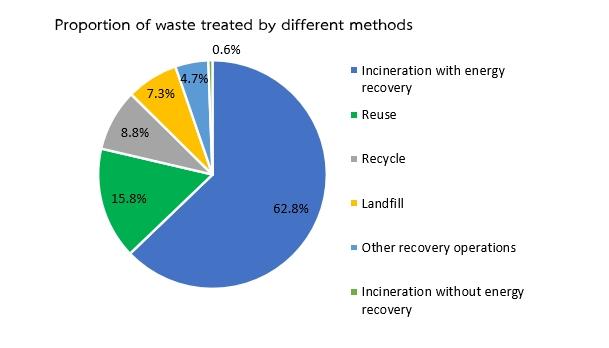
2) Solid waste management for the Zero Waste to Landfill target
The company recognizes the impact of waste disposal through landfill methods, which generate greenhouse gases, a major cause of climate change. As a result, the company has set a goal to reduce waste to the point where no waste is sent to landfills for disposal (Zero Waste to Landfill) every year. The company’s approach includes reducing resource use, minimizing waste generation at the source, improving waste sorting efficiency, and applying circular economy principles to maximize the reuse of resources.
The Company strongly emphasizes stakeholder participation in waste management, aiming to responsibly utilize resources and maximize benefits in line with circular economy principles. The Company actively promotes and encourages both internal and external stakeholders to effectively manage waste, fostering increased responsibility within their respective units.
3) Solid Waste Management in AMATA Industrial Estates
The amount of solid waste generated within the two industrial estates amounted to 27,589.10 tons. This comprised 18,369.51 tons of waste generated by factory operators using the Company’s waste management services at AMATA City Chonburi Industrial Estate and 9,219.59 tons at AMATA City Rayong Industrial Estate. In addition, solid waste generated from the Company’s common areas, including tree branches and wood waste from pruning activities, totaled 1,706.40 tons, consisting of 954.45 tons from AMATA City Chonburi Industrial Estate and 751.95 tons from AMATA City Rayong Industrial Estate. All solid waste generated from the common areas was managed by licensed external contractors with expertise in waste management. The Company oversees such operations to ensure compliance with applicable environmental requirements.
AMATA City Chonburi Industrial Estate | AMATA City Rayong Industrial Estate | |
Solid waste management services to factory operators | 18,369.51 tons | 9,219.59 tons |
Solid waste from industrial common areas operation | 954.45 tons | 751.95 tons |
Total | 19,323.96 tons | 9,971.54 tons |
Solid waste management services to factory operators is sorted by contractors at the waste sorting facility within the AMATA Industrial Areas. The sorting follows the 3Rs principles (Reduce, Reuse, Recycle) and is then disposed of using various methods by contractors who are licensed and specialize in waste disposal, both municipal and industrial, in compliance with the law. Additionally, the company has a waste management approach that begins at the source, providing guidance to factories using its waste disposal services on how to properly sort and categorize waste before sending it to the sorting facility. This ensures that the waste entering the sorting process is of high quality, enabling it to be used in the production of refuse-derived fuel (RDF) and recyclable materials. The remaining waste, which cannot be used, is minimized or completely avoided from being sent to landfills.
Since 2011, the company has continuously worked to reduce the amount of waste sent to landfills at the AMATA City Chonburi Industrial Estate, in alignment with the organization's policies and goals to accomplish the Company's objectives of reducing the amount of solid waste disposed to landfills, the Company focused on improving the waste management process from sending to landfills to sorting recyclable waste and the production of alternative fuels in the form of waste fuels (Refuse-derived Fuel: RDF), which will be used as a fuel for co-incineration at cement plants.
In 2025, the Company successfully separated 12.39% of recyclable waste and 87.61% of waste suitable for Refuse-Derived Fuel (RDF) production from the total solid waste processed at its waste separation plant in AMATA City Chonburi Industrial Estate. Through these efforts, the Company achieved a remarkable milestone—reducing landfill disposal to 0% of the total solid waste managed at the facility. In contrast, solid waste management at AMATA City Rayong Industrial Estate, solid waste was collected, transported, and managed by the Company’s legally licensed contractors. Under this approach, 71.03% of solid waste was converted into refuse-derived fuel (RDF) and solid recovered fuel (SRF) for use in electricity generation, while the remaining 28.97%, which could not be processed into fuel, was disposed of through sanitary landfill in accordance with applicable standards.
Through the implementation of the Zero Waste to Landfill approach, the Company successfully reduced waste management costs by 2.4 million baht in 2025. Furthermore, 89% of factory operators utilizing the Company's waste management services expressed satisfaction and confidence in its practices, ensuring that no waste was illegally disposed of. Additionally, neighboring communities of AMATA City Chonburi Industrial Estate have shown increased trust in the estate’s waste management system, reinforcing its commitment to responsible and sustainable waste disposal.
4) Industrial Waste Management
In 2025, the Company expanded the scope of data collection to include industrial waste management services provided to customers within the AMATA City Chonburi Industrial Estate. As a result, a total of 3,137.32 tons of industrial waste were generated, comprising 94.16 tons of hazardous waste and 3,043.17 tons of non-hazardous waste. All hazardous waste was treated through incineration, with collection, transportation, and treatment carried out by the Company’s legally licensed contractors in compliance with applicable regulatory requirements, to ensure proper and environmentally sound disposal. With respect to non-hazardous waste, 1,792.49 tons were processed into Refuse-Derived Fuel (RDF), 1,130.74 tons were sent for recycling, and 119.94 tons were treated through incineration without energy recovery. All waste management activities were conducted by contractors duly licensed under applicable laws.
5) Utilities Waste Management
The majority of waste generated from the operations within the industrial area’s core processes consists of sludge, which results from the water production system and the biological wastewater treatment system at both AMATA City Industrial Estates. This sludge is classified as non-hazardous waste. In 2025, the
Company generated a total of 5,765.5 tons of sludge, with 3,174 tons from the AMATA City Chonburi Industrial Estate and 2,591.5 tons from the AMATA City Rayong Industrial Estate. The company analyzed the quality of the sludge with 12 different tests using the Total Threshold Limit Concentration (TTLC) and Soluble Threshold Limit Concentrations (STLC) methods. The results showed that the toxicity levels of the sludge were below the standards set by the Ministry of Industry's Notification on the Management of Waste and Used Materials, B.E. 2566. As a result, the company has reused (100%) all of the sludge within the industrial area, using it for land filling within the industrial estate and as soil for planting trees.
6) Office Waste Management
The Company encourages all employees to participate in reducing waste and garbage in the office by conducting informational campaigns to promote understanding and awareness in proper waste management. Additionally, it has implemented the "All Save, All Win" project through various activities as follows:
Employees are provided with waste management guidelines and best practices via the Line application across all office locations—Bangkok, Chonburi, and Rayong—ensuring accessibility and efficiency in communication. Additionally, quarterly employee meetings incorporate waste management awareness discussions to reinforce proper segregation, disposal, and recycling measures.
The “Junk2Joy” initiative was implemented from April to October 2025 to encourage employee participation in proper waste segregation practices, with a focus on maximizing resource recovery. The initiative not only helped reduce the volume of waste sent for disposal but also created new value from residual materials through effective recycling and reuse processes. This initiative reflects the AMATA Group’s commitment to advancing circular economy principles and sustainable resource management. It was supported by employees at all levels and contributed to generating positive environmental and social impacts.
Promoting the reduction of paper usage in offices to minimize waste generation in all Company offices and promoting wastepaper recycling, the Company cooperated with SCG Packaging Public Company Limited to develop the "The "Old for New" Paper Recycling Initiative aims to reduce resource consumption and waste generation by collecting used paper from company offices for recycling and repurposing. This initiative contributes to natural resource conservation, waste minimization, and environmental impact reduction. In 2025, a total of 2,696 kilograms of used paper was recycled through this program.
Food waste reduction from the point of generation. Employees participate in pre-selecting lunch menus to reduce food waste at the source and minimize food leftovers. Additionally, food and beverages are provided in environmentally friendly packaging made from 100% recycled PET (rPET) plastic pellets at break rooms, in accordance with the Chief Executive Officer’s policy. In 2025, the company (Bangkok office) generated 2.61 tons of food waste, based on weight measurements.
Waste segregation activity, sorting waste for proper management, aiming to reduce the amount of landfill waste. In 2025, the Company (Bangkok Office) implemented a waste segregation program and facilitated the proper disposal of recyclable plastics and orphan waste, totaling 2.12 tons. This comprised 1.86 tons of recyclable waste and 0.27 tons of waste sent for refuse-derived fuel (RDF) production. The waste was transferred to authorized waste management and recycling organizations, as follows:
Plastic waste, paper boxes, and orphan waste were sent to Recycle Day, N15 Technology, Waste Buy Delivery, and Friends in Need (of "PA") Volunteers Foundation, Thai Red Cross
Used batteries and electronic devices were sent to CPALL and the Mirror Foundation.
The Company participated in recyclable waste collection activity with the Khlong Tamru Municipality, Mueang District, Chonburi Province. The proceeds from recycling waste were used to support bedridden patients, persons with disabilities, elderly individuals in home confinement, and underprivileged individuals within the municipal area.
Employee Engagement Activities in Waste Management with the encouragement to participate in waste management by donating waste that has been separated at home or in the office to ensure proper disposal.
Procurement of Employee Uniforms and AMATA Drinking Bottles under the “Rak AMATA” Brand, which are environmentally friendly:
Employee uniforms in 2025 were made from 100% recycled rPET plastic, totaling 1,385 pieces.
AMATA drinking water under the Rak AMATA brand is produced from 100% rPET recycled plastic without labels, totaling 88,320 bottles. This initiative helps reduce greenhouse gas emissions by 4.59 tons of carbon dioxide equivalent. Based on calculations, producing one bottle from recycled plastic can reduce greenhouse gas emissions by 0.052 kg of carbon dioxide equivalent (Source: Envicco Co., Ltd.). This reduction is equivalent to the carbon sequestration of 484 trees in one year, referencing an average carbon absorption rate of 9.5 kg of carbon dioxide equivalent per tree per year (Source: Thailand Greenhouse Gas Management Organization (Public Organization), December 2016).
On 24 December 2025, the Company organized a training session on Waste Management for Value Creation under the Circular Economy toward Net Zero, led by experts from the Faculty of Public Health, Burapha University. The objective was to provide knowledge and enhance understanding of waste management practices related to construction and industrial estate infrastructure. The session covered topics such as resource management using circular economy principles and the development of environmentally friendly products and industrial processes. A total of 55 employees participated in the training, accounting for 18.46% of the total workforce.
7) Promoting customers’ participation in industrial waste management
Smart Waste Tracking System (KoomKah Smart Manifest)
The Company encourages customers in industrial estates to implement proper waste management practices by integrating technology into waste data management. This enhances efficiency in waste management within the industrial estate through the Smart Waste Tracking System (KoomKah Smart Manifest). Customers utilizing the service can monitor waste collection volumes in real-time, ensuring transparency, improving waste collection and transportation services, and reinforcing confidence in the Company’s waste disposal processes. In 2025, 100% of customers who are using the Company’s solid waste management services in AMATA City Chonburi Industrial Estate have adopted the KoomKah Smart Manifest system. The Company plans to expand its implementation to AMATA City Rayong Industrial Estate in the near future.
Industrial Waste and Solid Waste Management Award
The Company encourages factories to participate in awards and provides them with accurate knowledge and understanding of solid waste and industrial waste management standards required by law in AMATA City Chonburi Industrial Estate and Rayong. Therefore, the Company has continued to organize the “AMATA Best Waste Management Awards" project, an annual event held from 2014 to the present, to promote and encourage the factories to increase the efficiency of non-hazardous industrial waste management, solid waste management, and sewage. By applying the 3Rs (Reduce, Reuse, and Recycle) principles in waste management, the factories can reduce their production costs. The Company’s goal is to provide customers with effective industrial waste and solid waste management within their factories before sending them to the waste separation plant to increase the ratio of waste that can be used for Refuse-derive fuel: RDF production and recyclable waste.
In 2025, a total of 109 companies participated in the AMATA Best Waste Management Awards, representing an increase of 18.47% compared with 2024. The Company applied the assessment criteria aligning with sustainable development principles, focusing on the economic, social, and environmental dimensions. The assessment was conducted through both online and onsite evaluations. The onsite evaluations served as mandatory criteria for factories that had upgraded from the previous year, as well as for factories participating in the Gold and Platinum levels for the first time.
GHG — Plan & Guidelines
Has a GHG Management Plan
Yes
Plan Description
Climate change is a significant challenge that poses a high risk in industrial water management. This is because water is a major raw material for industrial estate business operations and also causes physical risks due to increasingly severe natural disasters each year. Climate change has a significant impact on various stakeholders in the value chain, such as the industrial water usage in factories' production lines, the livelihoods, and the well-being of factory employees and surrounding communities. Additionally, it increases the Company's operating costs on industrial water production to ensure a continuous supply of water that meets industrial quality standards for factories in the industrial estates. It is also important to consider preventing physical risks associated with various natural disasters in both existing industrial estates and future projects.
There are changes in laws and regulations, both domestic and international, that relate to the climate. These changes pose a transition risk for the Company and factory operators in the industrial estate. As a result, the Company must prepare for the increasing demands of current and future customers regarding climate change. This can be done by disclosing energy consumption and greenhouse gas emissions from various utilities, developing sustainable products and services, and reducing risks that may impact the Company's competitiveness in the future.
The Company has launched the "Save Earth, Safe Us" campaign as well as policies and management guidelines aiming to reduce greenhouse gas emissions and cope with climate change. These consisted of three management strategies:
Strategy 1: Climate Resilience City
The Company places a great emphasis on addressing climate change, specifically in relation to factors such as precipitation patterns, rainfall, and the intensity of rainstorms in the eastern region that have led to drought or flooding over the past few years. The Company, therefore, prioritizes integrated and sustainable water management of all kinds, including raw water, industrial water, drought, wastewater, and flooding. This focus enables the Company to ensure water security, build confidence in customers and communities in the area, and mitigate risks that could impact business operations and the quality of life of stakeholders.
Strive for water security by expanding internal reservoirs
The Company has set a policy to prepare raw water reserves that are at least 150% greater than the total water demand in the industrial estates per year.
Reduce surface waterdependence by utilizing treated water based on the zero-discharge principle
The Company maximizes the reuse of treated water to reduce dependence on natural surface water sources and the risk and severity of impacts in cases of drought.
Develop infrastructure and capabilities to handle and prevent flooding
The Company has developed infrastructure and water management systems to prepare for and prevent flooding, as well as raised awareness among stakeholders about the efficient use of water resources and keeping public waterways clear of debris and impediments through the AMATA Water Management Learning Center and a water management community development project.
Search for strategic locations
The Company prioritizes the strategic locations of its projects to minimize negative impacts on factory operators and enable long-term business operations, and the results of climate change impact studies in each region are used as one of the key factors in selecting future project locations.
Utilize Technology for Risk Management
The Company has installed smart weather stations in AMATA City Chonburi Industrial Estate and AMATA City Rayong Industrial Estate, totaling 11 stations. These stations enable real-time weather forecasting and monitoring to promptly track atmospheric changes. This allows for efficient water reservoir management within the industrial estates and enhances preparedness for climate variability and extreme weather conditions.
Strategy 2: Carbon Neutral City
Amid the increasingly severe impacts of climate change and the global policy momentum accelerating the transition toward a low-carbon economy, Thailand has strengthened its climate commitment by announcing an earlier target year for achieving net-zero greenhouse gas emissions, advancing the goal from 2065 to 2050. This milestone represents a significant turning point in the country’s transition to a low-carbon economy and serves as a key driver for the private sector to accelerate its adaptation in line with international standards, climate-related requirements across global value chains under the Paris Agreement, and rising expectations from supply-chain partners.
In this context, the Company places strong emphasis on reducing greenhouse gas emissions, which are a primary driver of climate change, and has set more ambitious targets to progress toward becoming a carbon-neutral city by 2040. To ensure that the Company’s greenhouse gas management practices and related disclosures are aligned with this objective, the Company reviewed its operational activity data for the year 2024 and refined the organizational boundary of its greenhouse gas inventory. This enhancement was undertaken to ensure that the GHG inventory more accurately reflects the Company’s current business structure, operational activities, scale of operations, and energy-use profile. The review covered the reassessment of the organizational boundary, the collection of data from significant operating units and subsidiaries with material contributions to the Company’s greenhouse gas emissions, and alignment with the requirements of relevant international standards. These actions were implemented to enhance the completeness, transparency, and comparability of climate-related disclosures and to ensure that the information provided supports informed decision-making by stakeholders.
Based on this review, the Company has designated 2024 as a new base year for setting targets and tracking future progress in greenhouse gas emissions reduction. The Company has set a target to achieve a 20% reduction in absolute greenhouse gas emissions by 2030 compared with the 2024 base year. The adoption of this new base year, which is aligned with the current reporting boundary, enables more accurate and consistent interpretation of progress toward the Company’s greenhouse gas reduction targets. The revision of the base year and the elevation of targets toward absolute greenhouse gas emissions reduction reflect the Company’s commitment to achieving tangible and measurable reductions in greenhouse gas emissions, rather than focusing solely on improvements in operational efficiency. These actions also support Thailand’s transition toward a low-carbon economy and enhance the Company’s preparedness for increasingly stringent climate-related regulations and stakeholder expectations in the future.
The Company has established the following implementation approaches to achieve these targets:
Increase energy efficiency
The Company has replaced electrical equipment used in offices and common areas with energy-saving devices, reduced the use of fossil fuels, and integrated this strategy into the Company's business development plan to drive AMATA Smart City projects that prioritize energy efficiency through implementation of technology and utilization of low-carbon energy sources.
Minimize waste sent to landfills
According to the Zero Waste to Landfill target, the Company has applied principles of the circular economy to the solid waste and industrial waste management process, promoting recyclable waste sorting, maximizing the use of recyclable waste, and minimizing waste disposed of in landfill.
Accelerate the transition to renewable energy with suitabletechnologies
The Company promotes renewable energy generation by adopting technologies that are appropriate for its business operations and site conditions, while continuously increasing the share of clean energy used within the industrial estates, with a focus on both central utility systems and the Company’s office buildings.
Collaborate with partners to enhance their capacityto reduce greenhouse gas emissions.
The Company promotes research and development to reduce greenhouse gas emissions throughout its value chain and product life cycle. As a result, the Company focuses on platform development as well as project design and management using Building Information Modeling (BIM) technology and the Leadership in Energy and Environmental Design (LEED) building standard.
Strategy 3: Climate-related Products & Services
The Company foresees an opportunity to develop new products and services based on the needs of factory operators in today's industrial estates. These operators are affected by the enforcement of climate change laws and regulations, changes in foreign trade regulations driven by the government policies in each country, and more stringent climate policies from overseas head offices. This also includes addressing the needs of new customers or target groups who are particularly concerned about the increasing trend of climate change. As part of its 2025 strategy, the Company has initiated the development of new climate-related products and services focused on reducing greenhouse gas (GHG) emissions and enhancing climate resilience as follows.
GHG — Emissions
GHG Emissions
| Metric | Current Year | Previous Year | Two Years Ago |
|---|---|---|---|
| Total GHG emissions (Metric tonnes of carbon dioxide equivalent) | 1,450,829 | 1,587,779 | 63,861 |
| Total greenhouse gas emissions 1 (Metric tonnes of carbon dioxide equivalent) | 1,345 | 1,438 | 579 |
| Total greenhouse gas emissions 2 (Metric tonnes of carbon dioxide equivalent) | 18,252 | 23,442 | 14,639 |
| Total greenhouse gas emissions 3 (Metric tonnes of carbon dioxide equivalent) | 1,431,232 | 1,562,899 | 48,643 |
GHG — Emissions Verification
Emissions Verified by a Third Party
No
GHG — Principles & Standards
Principles & Standards Applied
| Standard |
|---|
| 2671 |
| 2672 |
GHG — Targets
Has Set GHG Targets
Yes
GHG Targets — Carbon Neutrality
Carbon Neutrality Targets
| Emission Scope | Carbon Neutrality Certified | Base Year | Target Year | Unit |
|---|---|---|---|---|
| 2715 | N | 2,024 | 2,040 | Metric tonnes of carbon dioxide equivalent |
GHG Targets — Other Targets
Other GHG Targets
| Emission Scope | Base Year | Base Year Emissions | Near-term Target Year | Near-term Target Change (%) | Long-term Target Year | Long-term Target Change (%) | Target Year | Target Change (%) | Unit |
|---|---|---|---|---|---|---|---|---|---|
| 2715 | 2,024 | 24,880 | 2,025 | 3.3 | 2,030 | 20 | 2,025 | 3.3 | Metric tonnes of carbon dioxide equivalent |
GHG — Performance & Outcomes
Has Performance Results
Yes
Performance Description
1) The development of new climate-related products and services focused on reducing greenhouse gas (GHG) emissions and enhancing climate resilience
AMATA Carbon Neutral Network: ACNN
The Company has established a greenhouse gas (GHG) emissions reduction network within its industrial estates under the name AMATA Carbon Neutral Network (ACNN). The initiative is led by AMATA Facility Services Co., Ltd., in collaboration with AMATA City Chonburi Industrial Estate Office and the AMATA City Rayong Industrial Estate Office, serving as key coordinators in establishing the network. The primary objective of ACNN is to serve as a collaborative platform that fosters awareness, understanding, and cooperation among businesses within AMATA City Chonburi and AMATA City Rayong industrial estates to implement concrete greenhouse gas reduction activities. This initiative aligns with the Company’s commitment to achieving Carbon Neutrality and ultimately reaching Net Zero emissions.
As of the end of 2025, the AMATA Carbon Neutral Network (ACNN) comprised a total of 113 member companies, representing an increase of 52.7% compared with 2024. This growth reflects increasing awareness and commitment among businesses to advancing greenhouse gas emissions reduction efforts. The majority of members are business operators within AMATA City Chonburi Industrial Estate, followed by those in AMATA City Rayong Industrial Estate and external companies in the Eastern region of Thailand.
The Company actively supports ACNN by organizing expert-led sustainability and carbon reduction seminars to enhance members’ understanding and prepare them for sustainable business practices. Additionally, ACNN conducts workshops, training programs, and knowledge-sharing sessions on key topics such as green energy, renewable energy, alternative energy, clean energy, carbon credits, product carbon footprint (CFP), and corporate carbon footprint (CFO).
ACNN Network Activities in 2025 were as follows.
“Carbon Footprint Journey: From Fundamentals to Practical Application in Organizations” to Support Businesses in Reducing Greenhouse Gas Emissions
AMATA Facility Services Co., Ltd., in collaboration with the Expert Centre of Innovative Clean Energy and Environment (InnoEN) and the Thailand Institute of Scientific and Technological Research (TISTR), organized a practical workshop entitled “Carbon Footprint Journey: From Fundamentals to Practical Application in Organizations” at Model Room, AMATA Service Center. The seminar was delivered by Dr. Chiraphat Kumpidet and Dr. Angkana Khueanphet, and covered key topics including fundamental concepts of carbon footprint assessment, preparation of verification sheets, hands-on workshops using actual data, and practical approaches to greenhouse gas emissions reduction. The sessions were held on 29 August 2025 and 30 September 2025, with a total of 74 participants across two cohorts.
Unlock Thailand’s Energy Future: Breaking Barriers with Low-Cost, Low-Carbon Solutions
The Company, through the AMATA Carbon Neutral Network (ACNN), supported a seminar hosted by Poly Technology Co., Ltd. on 17 September 2025 at Nikko Hotel AMATA City Chonburi. The seminar served as a platform for knowledge exchange and discussion on the development of clean energy solutions with cost-effective approaches, alongside greenhouse gas emissions reduction, to support the energy transition of Thailand’s industrial sector toward a low-carbon society. Key sessions included presentations on C&I Smart Energy Solutions by Huawei, focusing on efficient energy management for industrial and commercial buildings, as well as an overview of Thailand’s green energy landscape and national-level approaches to developing low-cost, low-carbon energy solutions.
AMATA Carbon Neutral Network Conference 2025
The AMATA Carbon Neutral Network (ACNN), led by the AMATA City Chonburi Industrial Estate in collaboration with AMATA Facility Services Co., Ltd. and network partners, organized the ACNN Annual Network Conference 2025, held on 20–21 November 2025 at Nikko Hotel AMATA City Chonburi. The event served as a platform for knowledge exchange on trends and solutions related to energy, technology, and carbon management for the industrial and business sectors, and included seminar sessions and a mini exhibition. As part of the event, the declaration ceremony of the AMATA Carbon Neutral Network (ACNN) was held on 21 November 2025 to bring together industrial operators within AMATA City Chonburi Industrial Estate and AMATA City Rayong Industrial Estate in driving the transition of industrial cities toward sustainability, through the promotion of low-carbon policies, energy efficiency, and the exchange of approaches related to clean energy, green energy, and smart technology innovations. The event was attended by participants from 109 companies, totaling more than 143 attendees.
Providing Solution of Intelligent Carbon and Energy Platform
The Company has developed the Solution of Intelligent Carbon and Energy Platform, operated by AMATA Facility Services Co., Ltd., to support customers in managing greenhouse gas (GHG) emissions and optimizing energy consumption across various activities. The platform provides the following services:
Preparation of carbon footprint reports for organizations (CFO) and products (CFP) following Thailand Greenhouse Gas Management Organization (TGO) and ISO standards.
Data collection on carbon emissions from various activities, covering Scope 1, Scope 2, and Scope 3, using IoT, API integration, or manual data input.
Energy management consulting and strategic planning to enhance efficiency and sustainability.
Accurate, fast, and efficient carbon emission calculations and data management.
Integration with Renewable Energy Certificate (RECs) providers and carbon credit markets.
Carbon Neutral Event Services
The Company has enhanced its event management and corporate engagement services for both factory operators in AMATA industrial estates and external customers by transitioning from conventional event planning to carbon neutral event solutions. These services are managed by AMATA Facility Services Co., Ltd. and focus on minimizing environmental impact, optimizing resource efficiency, reducing waste generation, and lowering greenhouse gas (GHG) emissions and air pollution from events. Additionally, the Company procures carbon credits from greenhouse gas reduction projects in Thailand to offset emissions generated by events. In 2025, the Company successfully organized two carbon neutral events, namely the AMATA City Run 2025 and the AMATA Carbon Neutral Network Conference 2025. For both events, carbon credits were purchased from the Electricity Generation from Biomass by Nakornphet Greenergy Ltd. project to offset greenhouse gas emissions, resulting in a total carbon offset of 12 tons of carbon dioxide equivalent (tCO2e).
Clean Energy Services through Solar Power
In 2025, AMATA U Co., Ltd., a subsidiary of the Company, entered into a joint investment to establish AMATA B.Grimm Renewable Energy Co., Ltd. to develop a floating solar power generation project at AMATA City Chonburi Industrial Estate, with an installed capacity of 42.5 megawatts peak (MWp). The project aims to meet the growing demand for electricity from renewable energy sources among customers in the AMATA industrial estates that have set targets to reduce greenhouse gas emissions or achieve carbon neutrality. Currently, the project is in the process of obtaining licenses for electricity generation and distribution, as well as other renewable-energy-related permits, in accordance with applicable legal requirements.
The development of this project will serve as an important foundation for assessing the feasibility of expanding clean electricity supply across AMATA industrial estates in the future, as well as for developing renewable energy solutions and energy efficiency initiatives to support the advancement of Smart Energy City.
2) Greenhouse Gas Emissions of the Organization
The Company has prepared its Carbon Footprint for Organization (CFO) on an annual basis continuously since 2019, in accordance with the organizational carbon footprint assessment guidelines issued by the Thailand Greenhouse Gas Management Organization (Public Organization). These guidelines are developed based on the internationally recognized Greenhouse Gas Protocol (GHG Protocol), which serves as a global standard for organizational greenhouse gas accounting and reporting. The Company’s greenhouse gas inventory covers direct greenhouse gas emissions (Scope 1), indirect greenhouse gas emissions from energy consumption (Scope 2), and other indirect greenhouse gas emissions (Scope 3).
In 2025, the Company conducted a review and reassessment of its greenhouse gas emissions data for the year 2024 to reflect significant changes in the scope and coverage of its organizational greenhouse gas accounting. This reassessment was undertaken to ensure that the disclosed data more accurately and comprehensively reflects the Company’s current organizational structure, scale of operations, and business activities. Key aspects of the review and enhancement include the following:
The reporting boundary for the Company’s Carbon Footprint for Organization (CFO) was defined to cover the operations of the Company and all subsidiaries.
The reporting scope includes all facilities and utility systems under the Company’s responsibility.
The reporting scope was expanded to cover industrial estate areas in Thailand, including:
AMATA City Chonburi Industrial Estate
AMATA City Rayong Industrial Estate
AMATA Smart City Chonburi Industrial estate
AMATA City Chonburi 2 Industrial Estate
Nong Lalok Industrial Estate
The reporting scope was expanded to cover overseas industrial estate, including:
AMATA City Bien Hoa, the Socialist Republic of Vietnam
AMATA City Ha long, the Socialist Republic of Vietnam
AMATA City Long Thanh, the Socialist Republic of Vietnam
AMATA Smart & Eco City Laos (Namor), the Lao People's Democratic Republic
Based on the review and enhancement of greenhouse gas emissions data collection within the defined reporting boundary, the Company designated 2024 as a new base year for setting greenhouse gas emissions reduction targets and monitoring future performance. The revision of the reporting boundary has enhanced the completeness, transparency, and alignment of the Company’s greenhouse gas emissions data with its current operations, thereby providing a more robust basis for assessing the effectiveness of greenhouse gas mitigation measures. Greenhouse gas emissions data for the 2024 base year was verified by SGS (Thailand) Limited, an independent external assurance provider with expertise in greenhouse gas verification, to confirm the accuracy, completeness, and reliability of the data. In addition, the Company’s 2024 Organizational Carbon Footprint Report was certified by SGS (Thailand) Limited on 6 January 2026.
Following the review of the reporting boundary, enhancements to calculation methodologies, and data verification processes, the Company’s organizational greenhouse gas emissions for 2024 differed from the figures previously disclosed in the 2024 Sustainability Report. Based on the newly certified Carbon Footprint for Organization (CFO) report, the Company’s total greenhouse gas emissions from operations amounted to 1,587,779 tons of carbon dioxide equivalent (tCO2e), an increase from the previously reported figure of 1,523,918 tCO2e. The total emissions comprised direct greenhouse gas emissions (Scope 1) of 1,438 tCO2e, indirect greenhouse gas emissions from purchased electricity (Scope 2) of 23,442 tCO2e, and other indirect greenhouse gas emissions (Scope 3) totaling 1,562,899 tCO2e.
The Company has prepared its Carbon Footprint for Organization (CFO) report for 2025, covering the reporting period from January 1 to December 31, 2025. The greenhouse gas emissions data have been complied using the same principles, calculation methodologies, and reporting boundaries applied for the 2024 base year. The verification process is currently underway, with the company in the process of appointing an accredited verifier registered with the Thailand Greenhouse Gas Management Organization (TGO) to conduct data verification. The registration and certification of 2025 Carbon Footprint for Organization (CFO) are expected to be completed by the second quarter of 2026.
The Company has calculated its greenhouse gas (GHG) emissions for the year 2025 in accordance with the Carbon Footprint for Organization (CFO) assessment methodology established by the Thailand Greenhouse Gas Management Organization (TGO), together with the internationally recognized Greenhouse Gas Protocol (GHG Protocol). The total emissions amounted to 1,450,828 tons of carbon dioxide equivalent, comprising 1,345 tons of carbon dioxide equivalent from direct emissions (Scope 1) and 18,252 tons of carbon dioxide equivalent from indirect emissions related to purchased electricity (Scope 2). The combined direct and indirect emissions (Scope 1 & 2) totaled 19,597 tons of carbon dioxide equivalent, representing a reduction of 21.23% compared with the 2024 base year.
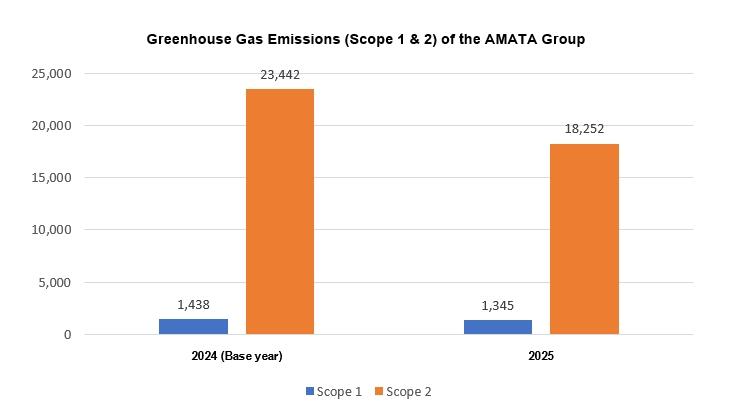
The reduction was primarily attributable to a significant decrease in Scope 2 greenhouse gas emissions from operations at the Company’s industrial estates in Vietnam. Electricity is supplied to factories within these industrial estates through substations operated and managed by the Company. A decline in electricity demand from factories resulted in a corresponding and material reduction in electricity losses within the distribution system. In addition, the Company improved the electricity system structure by relocating substations closer to major electricity consumers to reduce energy losses in the distribution network. These improvements contributed to a further reduction in Scope 2 greenhouse gas emissions compared with the previous year. Meanwhile, under the reporting scope of this report, greenhouse gas emissions from the Company’s direct and indirect operations (Scope 1 and Scope 2) in Thailand decreased by 2.92% compared with the 2024 base year, reflecting the Company’s continuous improvements in energy efficiency across its operations.
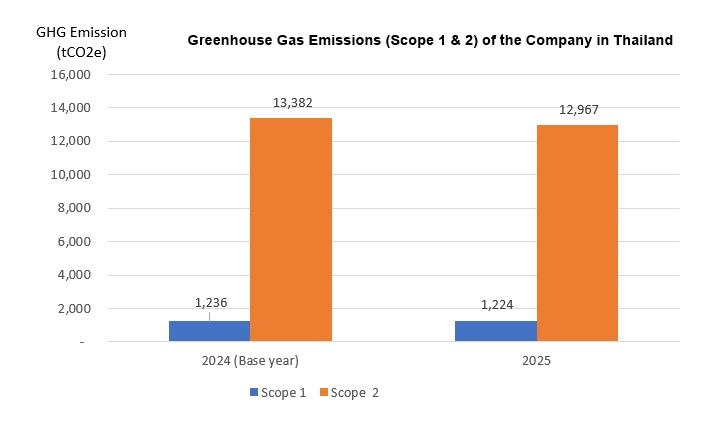
When considering only greenhouse gas emissions from the Company’s operations and industrial estates in Thailand that are in operation, the Company recorded direct greenhouse gas emissions (Scope 1) of 1,224 tons of carbon dioxide equivalent and indirect greenhouse gas emissions from purchased electricity (Scope 2) of 12,967 tons of carbon dioxide equivalent, resulting in total combined direct and indirect greenhouse gas emissions (Scope 1& 2) of 14,191 tons of carbon dioxide equivalent. The combined direct and indirect greenhouse gas emissions (Combined GHG Scope 1 & 2) intensity for the year 2025 was 0.41 tons of carbon dioxide equivalent per rai, or 2.58 tons of carbon dioxide equivalent per hectare, representing a reduction of 4.92% compared with the 2024 base year.
In 2025, the Company reported total other indirect greenhouse gas emissions (Scope 3) of 1,431,232 tons of carbon dioxide equivalent, representing a decrease of 8.42% compared with 2024. This change was primarily attributable to a reduction in greenhouse gas emissions from fuel and energy-related activities (category 3), resulting from a decrease in electricity-related energy consumption across the Company’s value chain.
Other indirect greenhouse gas emissions (Scope 3) | Greenhouse Gas Emissions (tons of carbon dioxide equivalent) |
Category 1: Purchased goods and services | 57,555 |
Category 2: Capital goods | 6,513 |
Category 3: Fuel and energy-related activities | 682,257 |
Category 4: Upstream transportation and distribution | 55 |
Category 5: Waste generated in operations | 2,054 |
Category 6: Business travel | 103 |
Category 7: Employee commuting | 296 |
Category 8: Upstream leased assets | 116 |
Category 13: Downstream leased assets | 68,357 |
Category 15: Investments | 613,926 |
Total | 1,431,232 |
The Company conducted materiality assessment of greenhouse gas emissions under Scope 3, considering the nature of business activities, the magnitude of greenhouse gas emissions, and their relevance across the Company’s value chain. The assessment identified four primary scope 3 categories with the highest emissions. These include Category 3: fuel and energy related activities, which are primarily associated with electricity procurement and distribution for utility systems within the industrial estates, including electricity losses in the power distribution network. Category 15 investments also represent a significant source of emissions, arising from the Company’s investments in joint ventures and associated entities engaged in the development and operation of energy and utility-related projects. In addition, Category 13: downstream leased assets contribute to emissions through energy consumption and operational activities of tenants within the industrial estates. Following by Category 1: purchased goods and services further contribute to Scope 3 emissions, covering emissions from the procurement of materials, equipment, construction works, and various services used in the development and operation of the Company’s industrial estates and projects.
Environmental Legal Incidents
Legal Violation Incidents
| Metric | Current Year | Previous Year | Two Years Ago |
|---|---|---|---|
| Number of cases or incidents of legal violations or negative environmental impact (cases) | 0 | 0 | 0 |
Other Environmental Management
Plan Description
Environmental Quality Management
Developing industrial estates can cause environmental pollution, which can negatively impact the environment as well as the health and quality of life of stakeholders working in industrial estates and surrounding communities. Inadequate environmental quality management may cause stakeholders to lose trust and generate opposition from the local community. This can potentially lead to the revocation of the Company’s business license.
The Company has assessed the environmental risks and impacts arising from its operations throughout the supply chain. It has monitored the operations of suppliers, contractors, and factories in both AMATA industrial estates that may cause negative environmental impacts. According to the assessment, environmental pollution that had a significant impact on stakeholders includes air pollution, industrial and solid waste, water pollution, factory noise, and odor. Therefore, the Company has been focusing on monitoring and controlling environmental impact to meet or exceed the criteria required by law. This involved selecting appropriate and efficient technologies and complying with the laws related to business operations in industrial estates, measures specified in the EIA report, and adhering to various environmental standards. The Company's 2025 targets included no incidents of significant violations of environmental laws and regulations, nor to face substantial penalties, and to ensure that all environmental quality indicators remained within the legal standards.
The following environmental governance principles have been used by the Company to monitor the environmental quality of the industrial estates:
1) Environmental Monitoring and Control Center: EMCC
The Environmental Monitoring and Control Center (EMCC) was established in 2013 and has been operating to continuously monitor the environmental quality of both AMATA industrial estates. The Environmental Monitoring and Control Center is made up of 5 systems and displays the online real-time environmental quality data from both industrial estates on a 24-hour basis, as shown in the diagram below.
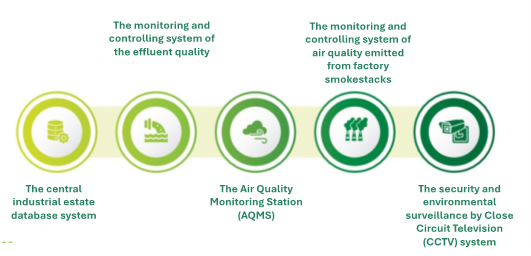
In 2025, the Company and factories in both AMATA industrial estates did not violate any environmental laws or regulations. Environmental quality indicators, such as air quality and wastewater quality after treatment from the central wastewater treatment system, were all within legal standards.
2) Disclosure of the Actions and Performance according to Preventive and Corrective Measures for Environmental Impacts (EIA Monitoring Report)
The Company discloses its actions and performance according to the environmental impact preventive and corrective measures in the Environmental Impact Assessment (EIA) Monitoring Report, which is submitted every six months to the Office of National Resources and Environmental Policy Planning (ONEP), the Industrial Estate Authority of Thailand (IEAT), the Office of Environmental and Pollution Control 13 (Chonburi), and the Provincial Office of Natural Resources and Environment. The report discloses the performance after the implementation of preventive and corrective measures stated in the EIA Monitoring Report in both AMATA City Chonburi and AMATA City Rayong Industrial Estate. The Company also presents the EIA Monitoring reports every six months to the Environmental Quality Audit Committee of both industrial estates, which consists of the Industrial Estate Authority of Thailand (IEAT), AMATA environmental officers, local government representatives, local community representatives, and representatives from the factories in AMATA Industrial Estate.
3) Social and Environmental Complaints Management
The Company provides various complaint channels for stakeholders who are affected by environmental pollution and can easily access and report the information directly, in accordance with ISO 14001:2015, to properly classify and handle each type of complaint.
Complaint Channels | Record and Assessment | Management and Resolution | Result Reporting |
Online channel:
Offline channel:
|
|
|
|
In 2025, the Company received 24 environmental complaints through various channels, comprising 17 complaints from factory to factory, 7 complaints from community to factory. Regarding the complaint, the Company, in collaboration with the Industrial Estate Authority of Thailand, conducted a site inspection alongside its environmental officers and community representatives to implement corrective measures and prevent recurrence. All 24 complaints (100%) have been fully resolved.
The Company did not receive any significant environmental and social complaints from stakeholders that directly affected its operations, nor any significant complaints regarding violations of environmental laws resulting in fines. Environmental complaints that arose between factories and communities were primarily related to odor concerns and wastewater management. The Company actively engaged in mediation and corrective actions to mitigate the impacts caused by factories in the industrial estate and provided support to improve their operational practices to minimize odor issues. Additionally, wastewater treatment systems were inspected to reassure surrounding communities of compliance with environmental standards.
4) Eco-Industrial Town Development
The Company has collaborated with the Industrial Estate Authority of Thailand (IEAT) to develop both AMATA industrial estates into Eco-Industrial Towns in accordance with government policy. The Company has integrated the Eco-Industrial Town development framework into its operations. This framework, established by the IEAT, consists of 5 dimensions and 22 aspects, covering physical, economic, environmental, social, and management dimensions. These dimensions align with the interests of the Company’s key stakeholders, including local communities, customers, employees, factory employees and local government authorities.
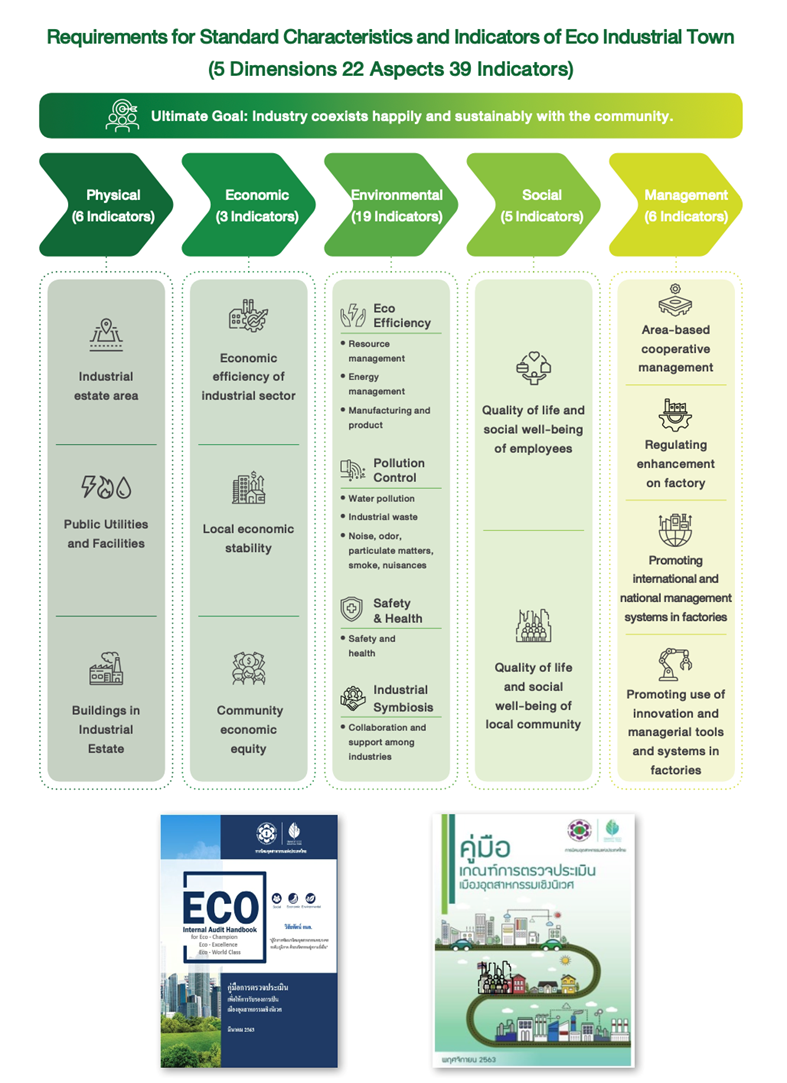
In 2025, AMATA Corporation Public Company Limited received the Eco-Excellence: E2 certification for the eighth consecutive year for AMATA City Chonburi Industrial Estate and the seventh consecutive year for AMATA City Rayong Industrial Estate. This achievement aligns with the company’s 2025 targets, demonstrating a commitment to sustainable industrial development that balances economic, social, and environmental aspects, while also enhancing community well-being.
Human Rights Due Diligence
Conducts Human Rights Due Diligence
Yes
Due Diligence Description
AMATA Corporation Public Company Limited and its subsidiaries (the Company) respect the human rights of all stakeholders and are committed to treating all stakeholders throughout the value chain fairly and appropriately in accordance with international human rights principles. The Company complies with both domestic and international laws applicable to its business operations and has established its framework in alignment with the UN Guiding Principles on Business and Human Rights (UNGPs) and the OECD Due Diligence Guidance for Responsible Business Conduct. The full policy and guidelines can be accessed at Human Rights Policy
The Company requires the board of directors, executives, and all levels of employees to recognize the importance and respect of human rights in every aspect of all individuals, whether employees, customers, suppliers, and contractors, as well as in communities and in society, according to the laws of each country where the Company runs business. The Company is committed to support the treaty that each country has obligations to comply with and to avoid actions and participation in human rights violations that negatively impact human rights.
Failure to address human rights impacts may result in a loss of stakeholder trust, social opposition, and potential disruptions to business operations, ultimately affecting long-term financial performance. Recognizing this, the Company is committed to comprehensive human rights governance and actively fosters stakeholder collaboration to promote equitable and sustainable development. To ensure effective oversight, the Company conducts human rights risk assessments biennially, with annual risk reviews. A structured Human Rights Due Diligence (HRDD) process is implemented as Picture attached.
Human Rights Risks and Impact Assessment
The Company successfully integrated human rights risk identification and assessment into various risk assessment processes across departments. These processes include Environmental Impact Assessment (EIA) in project development, identifying and evaluating environmental aspects and impacts, as well as risk assessment on occupational health and safety according to ISO standards, as well as other risk management processes relevant to the nature of each business activity.
In 2025, the Company did not conduct a full comprehensive materiality assessment. However, the Company reviewed the materiality of the material sustainability topics identified in 2024 by considering both impact materiality and financial materiality, together with information and risk context relevant to the Company’s business operations during the year. This was carried out in parallel with a human rights risk assessment across the value chain, covering all of the Company’s operational areas and all business activities throughout the value chain, representing 100% of activities, including those directly conducted by the Company and those linked to its involvement or business relationships in the supply chain.
This risk assessment covered issues that may cause adverse impacts on the human rights of different stakeholder groups connected to the Company’s business operations. The assessment was aligned with the United Nations Guiding Principles on Business and Human Rights (UNGPs) and the OECD Due Diligence Guidance for Responsible Business Conduct, in order to support the systematic prevention, mitigation, and management of human rights risks and impacts.
Salient Human Rights Issues
The Company has identified 14 human rights risk issues associated with its operations across the entire supply chain. These risks were evaluated based on two key dimensions: the severity of impact, measured by scale, scope, and irremediability, and the likelihood of occurrence. The prioritization of these risks is presented in a 4x4 Human Rights Risk Matrix, categorizing them into three levels: high risk, moderate risk, and low risk.
High-risk - Human rights risks that are critical and require immediate resolution with additional preventive or mitigating measures. | |
Moderate-risk – Human rights risks that currently have management measures in place, which partially mitigate impacts but still require more effective interventions. | |
Low-risk – Human rights risks that are sufficiently controlled or mitigated by existing preventive measures but require continuous monitoring for potential changes. |
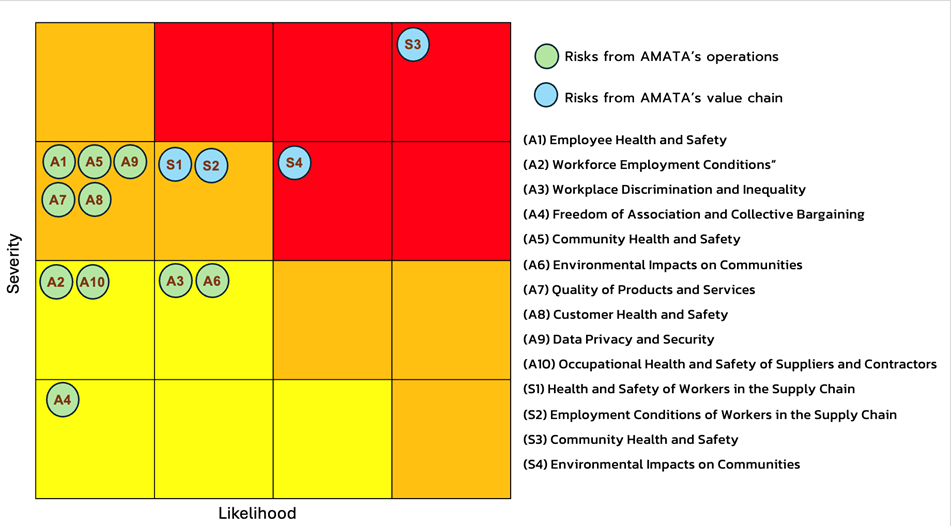
Human Rights Risk Management
Boundary | Significant Human Rights Issues | Impacted Stakeholders | Company’s actions for correction, prevention, and remedy |
Activities in AMATA’s Operation | Labor Rights
| Employees |
|
|
| ||
| |||
|
| ||
Community Rights
| Local communities |
| |
Customer/Consumer Rights
| Customers |
| |
|
| ||
Data Privacy and Security
| Employees, customers, shareholders, business partners |
| |
Supplier and contractor rights
| Supplier and Contractor |
| |
Activities in supply chain done by AMATA’s suppliers, contractors, and customers | Labor rights
| Employees of suppliers and contractors |
|
Community rights
| Local communities |
|
Monitoring and Evaluation
To ensure the monitoring of operational activities and prevent human rights violations, the Company has established a "Whistleblowing Policy" and provided various communication channels for employees and stakeholders to report any indications or complaints regarding human rights violations. The Company has established a process for reviewing and handling complaints in a prudent, fair, and transparent manner. Employees who violate human rights are considered unethical by the Company and must be subject to disciplinary action in accordance with the established regulations. Legal penalties may also be imposed if the action is illegal. In the event of human rights violations, the Company requires the responsible department to take immediate action to mitigate the impact and has fair reparation measures for those affected.
Chairperson of the Audit Committee | whistleblowing@amata.com | AMATA Corporation Public Company Limited 2126, Kromadit Building, New Petchburi Road, Bangkapi, Huay Kwang, Bangkok, 10310 P.O. Box 7, Monterey Tower Post Office, Bang Kapi, Huai Khwang District, Bangkok 10323 +66 (02) 792 0004 +66 (087) 131 0007 |
Chairman of the Board of Directors | whistleblowing@amata.com | |
Company Secretary | cs@amata.com |
In 2025, the Company received no complaints through its established grievance channels in relation to human rights violations, non-compliance with labour standards, or the use of child labour or forced labour, whether in its own operations or in the supply chain. The Company also received no complaints from communities or other stakeholders regarding health, safety, or environmental impacts arising from the Company’s operations or from the operations of suppliers and contractors. Nevertheless, the Company continues to place importance on monitoring, overseeing, and continuously improving its grievance channels and mechanisms to ensure that all stakeholder groups can raise concerns in a convenient, transparent, and fair manner.
Human rights risks arising from the operations of suppliers and contractors are classified as high-risk. To mitigate these risks, the Company has established a Supplier Code of Conduct, ensuring that all suppliers and contractors within its value chain operate in alignment with the Company’s ethical principles and respect the rights of all stakeholders. The Supplier Code of Conduct serves as a framework for communicating the Company’s expectations and overseeing suppliers’ and contractors’ performance in relation to labor practices, human rights, occupational health and safety, and environmental management. The Company conducts regular reviews of suppliers and contractors who fail to comply with the Supplier Code of Conduct and carries out on-site audits for those identified as having high-risk of human rights violations. Based on audit findings, corrective action plans are required to address any non-compliance issues, and progress is monitored to ensure that corrective actions are implemented within the specified timeframe.
In 2025, the Company conducted supplier risk assessments of 53 critical tier-1 suppliers, representing 100% of critical suppliers. Based on the results of the assessment, no suppliers were identified as having high human rights risk. For one supplier that had been identified as having high social and environmental risk in 2024, the Company carried out an additional onsite assessment, provided recommendations, and closely monitored the implementation of corrective actions. In 2025, the supplier fully implemented the agreed corrective action plan, and the assessment results confirmed that the associated risks had been reduced to an acceptable level.
Due Diligence Document Link
https://amata.com/images/sustainability/Human%20Rights%20Due%20Diligence%20EN%202025.pdf
Page Number in Report
1-12
Employees — Plan & Guidelines
Has an Employee Management Plan
Yes
Plan Description
Human resources play a crucial role in driving business success and achieving the Company's sustainable development strategy. Inefficient human resource management or a lack of adherence to human rights principles, particularly in terms of equality and respect for employees' rights, may increase the risk of losing talented employees and affecting business continuity and competitiveness. Without a process for employee development to update skills, knowledge, and capabilities in response to rapid changes in the business environment and modern customers’ needs, the Company risks missing out on business opportunities and failing to deliver products and services that meet customer demands.
The Company therefore places importance on effective human resource management across the entire employee lifecycle, from recruitment to employee care and retention. It is committed to responding to employees’ needs and expectations in order to strengthen employee engagement with the Company. Guided by a holistic approach to employee well-being, covering both physical and mental health, the Company seeks to ensure that employees remain physically healthy, emotionally well, and able to enjoy a good quality of life. This, in turn, supports employees in performing effectively and growing together with the Company. In parallel, the Company continuously promotes the development of employees’ skills, knowledge, and potential to strengthen workforce capability and resilience, enabling employees to adapt effectively to changes in business conditions, technology, and customer demands, thereby contributing to sustainable business performance.
Plan Document Link
https://amata.listedcompany.com/misc/one-report/20250331-amata-one-report2024-en.pdf
Page Number in Report
139-145
Plan Areas
| Plan Area |
|---|
| Fair employee compensation |
| Employee training and development |
| Promoting employee relations and participation |
| Occupational health and safety in workplace |
Employees — Workforce
Workforce Data
| Metric | Current Year | Previous Year | Two Years Ago |
|---|---|---|---|
| Total number of employees (Persons) | 298 | 289 | 275 |
| Number of male employees (Persons) | 163 | 156 | 156 |
| Number of female employees (Persons) | 135 | 133 | 119 |
| Total employment of disabled persons (people) | 1 | 1 | 1 |
| Total disabled employees (people) | 1 | 1 | 1 |
| Total male disabled employees (people) | 1 | 1 | 1 |
| Total female disabled employees (people) | 0 | 0 | 0 |
| Total disabled workers who are non-employee (people) | 0 | 0 | 0 |
| Contributions to the fund for promoting and improving the quality of life for disabled persons | 0 | 0 | 0 |
| Total number of male employees in operational level (Persons) | |||
| Total number of male employees in management level (Persons) | |||
| Total number of male employees in executive level (Persons) | |||
| Total number of female employees in operational level (Persons) | |||
| Total number of female employees in management level (Persons) | |||
| Total number of female employees in executive level (Persons) |
Employees — Remuneration & Provident Fund
Remuneration & Provident Fund
| Metric | Current Year | Previous Year | Two Years Ago |
|---|---|---|---|
| Total disabled employees (people) | 273,751,024.77 | 259,925,086.94 | 248,247,926.22 |
| Total male employee remuneration (Baht) | 145,876,876.84 | 132,354,293.93 | 131,499,971.38 |
| Total female employee remuneration (Baht) | 127,874,147.93 | 127,570,793.01 | 116,747,954.84 |
| Number of employees eligible to participate in PVD (persons) | 99 | 100 | 97 |
| Total number of employees joining employee provident fund (Persons) | 90 | 88 | 85 |
| Percentage of total number of employees joining employee provident fund to total number of employees (%) | 30.2 | 30.45 | 30.91 |
| Number of PVD members / Total eligible employees (%) | 90.91 | 88 | 87.63 |
| Total amount of provident fund contributed by the Company (Baht) | 8,245,777.91 | 8,167,914.61 | 6,724,438.08 |
| Total amount of provident fund contributed by employee (baht) | 8,311,491.09 | 7,867,446.29 | 6,311,286.12 |
Employees — Training & Development
Training Data
| Metric | Current Year | Previous Year | Two Years Ago |
|---|---|---|---|
| Average employee training hours (Hours / Person / Year) | 24.45 | 23.31 | 20.56 |
| Employee development and training expenses (baht) | 2,850,000 | 6,135,474.85 | 2,428,179.73 |
Employees — Occupational Health & Safety
Occupational Health & Safety Data
| Metric | Current Year | Previous Year | Two Years Ago |
|---|---|---|---|
| Total number of lost time injury incidents by employees (Cases) | 0 | 1 | 1 |
Employees — Labour Relations
Labour Relations Data
| Metric | Current Year | Previous Year | Two Years Ago |
|---|---|---|---|
| Total voluntary resignations (Persons) | 19 | 18 | 11 |
| Male employees who voluntary resigned (Persons) | 9 | 13 | 4 |
| Female employees who voluntary resigned (Persons) | 10 | 5 | 7 |
| Percentage of employee turnover leaving the Company voluntarily (%) | 6.38 | 6.23 | 4 |
| Evaluation result of employee engagement | 1 | 1 | 1 |
Employees — Employee Representation
Employees Are Represented Collectively
Yes
Forms of Representation
| Form |
|---|
| Welfare committee |
Employees — Targets
Has Set Employee Targets
Yes
Targets
| Indicator | Target Areas | Target Year | Target Year — Description |
|---|---|---|---|
| Employee Engagement Score | 2990 · Other name: Employee Engagement Score · Description: Others | 2,025 | More than 74% |
| Employee Turnover Rate | 2990 · Other name: Employee Turnover Rate · Description: Others | 2,025 | Less than 10% |
| Average Training Hours per Employee per Year | 2984 · Description: Employee training and development | 2,025 | At least 18 hours |
Employees — Performance & Outcomes
Has Performance Results
Yes
Performance Description
1) Recruitment and Employment
The Company places significant importance on recruitment, selection, and hiring processes to ensure that employees possess the necessary qualifications, capabilities, and alignment with the Company’s strategic direction. The recruitment process sources candidates both internally and externally while adhering to the principles of fairness, equity, transparency, and non-discrimination throughout all hiring stages. The Company has set a target to achieve at least 70% of planned recruitment and hiring objectives annually.
In 2024, the Company had a total of 46 job openings, successfully recruiting and hiring 39 new employees, achieving a recruitment success rate of 85%. As of 31 December 2024, the Company employed a total of 309 employees, with details as follows:
The Company has a Retirement Policy that allows retired employees to return to work voluntarily. Since the Company is well aware that certain retired employees are still healthy, able to work efficiently, and provide value to the Company by passing on their work experience to the younger generation, it then offers the retired employees the opportunity for re-employment, taking into account the retired employees and the appropriateness of the work requirement each year. The rehired employees will receive proper compensation in accordance with the policy, as well as benefits comparable to those of full-time employees. In 2024, a total of 6 employees retired, and 14 retired employees continued their employment under the Company’s annual post-retirement employment policy.
2) Employee care and retention
Welfare and benefits
The Company provides additional welfare and benefits to all employees without discrimination by considering the appropriateness of duties and responsibilities. Employees are allowed to participate in a "Welfare Committee," which consists of 18 employee representatives elected by a majority vote and 6 Company representatives, aiming to improve a welfare program and employees’ care activities. The Welfare Committee meets every two months with the aim of promoting a better quality of life at work, which would enhance the employees’ performance accordingly, and it is also a channel to receive opinions, suggestions, and complaints from employees.
In 2024, the Company enhanced its healthcare benefits policy, introducing an annual flexible medical benefit to support employees' medical expenses. This benefit covers additional healthcare services, including dental treatments, LASIK surgery, and prescription eyeglasses to ensure employees' well-being.
The Company has consistently supported long-term financial planning and retirement preparedness for employees. To facilitate this, the Company established a Provident Fund to assist employees in securing their financial future. As of 2024, 169 employees (equivalent to 54.7% of the total workforce) are members of the fund. The Company has engaged two asset management firms to oversee the fund since 2020, ensuring diversified investment strategies for risk management, prioritizing employee financial security. Additionally, the Company invites financial experts to educate employees on economic trends, investment strategies, and tax benefits, enhancing financial literacy and preparedness.
Performance Evaluation and Compensation Management
To attract and retain outstanding employees as well as to develop them into future leaders, the Company provides fair compensation and proper welfare based on their performance and rewards those who excel. Additionally, the Company participates in a credible institution’s salary and welfare survey to continuously benchmark with other companies in related industries. This enables the Company to utilize the data for remuneration management that aligns with employees’ expectations and market competitiveness and facilitates the recruitment of more capable and talented workers.
The Company conducts performance evaluations for executives and employees twice a year, at mid-year and year-end. The individual performance assessment results are considered in determining the annual compensation for executives and employees. The Company allows employees to participate in developing their own work plans and performance targets together with their supervisors to be consistent with the department and the corporate KPIs. This allows supervisors and employees to have two-way communication and discussion on how to improve work efficiency while enhancing a good working relationship. This is an important method for increasing employee commitment to the Company and a key tool for driving the Company toward its goal.
The Company has refined the performance evaluation criteria for the Chief Executive Officer and senior executives by establishing clear performance indicators aligned with corporate strategy and direction. The performance metrics for all senior executives are structured in accordance with the Company’s long-term strategic plan for 2030 and integrated with Corporate KPIs. The evaluation follows the Balanced Scorecard framework, incorporating non-financial performance indicators across environmental, social, and governance (ESG) dimensions.
In 2024, the Company’s performance evaluation covered all employees and executives (100%), and the individual performance evaluation results were used for their annual remuneration management.
3) Employee Health and Well-being
The Company has a policy to allocate an annual budget to promote employee well-being, ensuring a healthy work environment. This includes health and safety programs, on-site fitness facilities, and recreational spaces designed to foster interaction between new employees and retired employees who continue to work under extended contracts. Additionally, the Company develops educational materials on disease prevention and self-care, which are disseminated through internal communication channels, including employee Line groups, by in-house healthcare professionals, particularly during seasonal outbreaks.
4) Employee Occupational Health and Safety
The Company places high importance on employees’ compliance with laws related to work and instills a culture of occupational health and safety among all levels of management and employees through occupational health and safety policies. The goal is to reduce the number of lost time injuries to zero (Zero LTIFR).
To accomplish this goal, the Company has organized activities to promote occupational health and safety in the workplace, as well as employees’ health promotion, which includes identifying the work-related hazards and risks to the health and safety of employees and establishing measures to control the risks of such activities or processes, as well as reporting and investigating unusual incidents or accidents that occurred to prevent recurrence. The Company promotes employee health by improving the working environment to meet standards, ensuring appropriateness and safety. This includes arranging health check-ups for newcomers, providing an annual health check-up welfare program, and offering vaccinations against various diseases. Additionally, the Company fosters physical and mental well-being through activities such as establishing health and sports clubs tailored to employee interests. These include meditation clubs and various sports clubs such as yoga, running, badminton, football, aerobics, etc.
The Company provided employees with health information from medical professionals and conducted basic firefighting training and fire evacuation drill annually. This ensured that employees were prepared to deal with emergencies and equipped with necessary skills. The training included basic fire suppression, proper practice for safety while the fire occurs, data recording during the drill, an assessment of the time spent for evacuation, and communication efficiency during the incident, as well as informing the summary of training results to the participants.
In 2024, the company recorded one work-related injury resulting in lost workdays. The Lost Time Injury Frequency Rate (LTIFR) for employees was 1.54 cases per 1 million working hours.
5) Employee Development
The Company acknowledges the significance of developing employees' potential, knowledge, and skills across diverse professions and positions. This preparation is essential for addressing future business opportunities and challenges and to drive toward a high-performance organization. To support this, the Company has introduced the "AMATA Learning Journey”, a development framework based on the Company's core competencies. Additionally, "Learning Solutions" have been implemented to promote self-development for employees at all job levels, fostering behaviors that align with the Company's expectations.
In 2024, the Company provided a comprehensive learning and development program on 'How to Create Your Own Effective IDP (individual development plan)' to employees at all levels, based on the 70:20:10 Learning Model. This involved guiding supervisors and subordinates in discussing and planning their development and addressing any skill gaps. As a result of the training, 65% of employees completed their IDPs. Additionally, the Company analyzed the data on employees' basic knowledge needs to determine the training requirements for the following year.
The Company has also developed the “AMATA Leadership Development Program” for junior, mid-level, and senior executives, aiming to cultivate and prepare future leaders with leadership qualities and the appropriate skills and knowledge that align with the qualifications of key succession roles. This initiative ensures the Company's stable growth and competitive advantage. The Company continuously improves and develops the program to cover both Soft Skills and Hard Skills in business management. The main objectives of the program development include:
1. Enhance organizational awareness of business operations, cross-functional impacts, and risk preparedness to navigate market shifts and regulatory changes.
2. Develop competencies in strategic management, digital transformation, and workforce leadership to improve operational efficiency and resilience.
3. Foster leadership capabilities and succession planning readiness to strengthen organizational sustainability and governance.
The Company provides specialized competency development programs to enhance workforce skills resilience and industry-specific expertise. These initiatives focus on upskilling employees in critical operational roles to improve workforce productivity and professional competency. Examples include training on responsible contracting and infrastructure project risk management, aligned with International Federation of Consulting Engineers (FIDIC) standards, for engineering and legal compliance teams. Additionally, the Company offers customer service excellence and professional mindset training for frontline employees and VIP customer service teams to ensure high service standards and positive customer engagement.
The Company has organized a program called “AMATA Rising Stars” to identify and nurture high-potential employees. This program aims to support employee development, mitigate the risk of talent shortage, and facilitate the Company's expansion plan. The target is to select 12 high-potential employees annually or 5% of total employees. Rising Star employees will undergo individual development and career path planning, and will be given priority consideration for succession planning. Since the inception of the Rising Star project in 2021, the Company has increased the number of employees considered as successor candidates by 6, selected from the Rising Star group, bringing the total number of accumulated successor candidates to 12.
In 2024, the Company launched an Employee Education Grant Program to promote continuous learning and workforce development, supporting employees in enhancing their skills and career growth opportunities. This initiative aligns with the Company’s Visionary for Leaders value, fostering employee engagement and retention. Employees can apply for scholarships year-round for undergraduate or master’s degree programs conducted in English at leading national universities.
The Company also set a target for the average employee’s training hours of 18 hours per person per year. The Company developed onsite and online training courses in which 80.91% of all employees participated, for a total average of 23.31 training hours per person per year; the management level received an average of 54.63 training hours per person per year, and the operational staff received 17.72 training hours per person per year.
6) Employee Engagement
The Company conducts an annual employee engagement survey to measure the level of engagement among employees. This includes their interests, expectations, feedback, suggestions, and any complaints they may have. The Human Resources Management Committee is responsible for developing and enhancing employee care programs and initiatives. The results of these efforts are then reported to high-level management and Company board meetings.
The Company has informed the employees about the results of employee engagement survey and the progress of managing issues found in the previous year through the Company’s intranet, quarterly staff meetings and communication through employee representatives in the welfare committee to further develop projects and take better care of employees.
In 2024, the survey results showed that the average employee engagement score was 70% an increase from the previous year but still below the target of 74%. Employees urgently suggested development initiatives, particularly in high-potential employee management and workforce planning (Talent & Staffing) to support business expansion and regional projects over the next three years. The Company has taken these concerns into consideration for future action.
Regarding the management of high-potential employees, the Company has implemented a development program for high-potential employees and succession candidates to enhance their project management skills at both the business and departmental levels. For workforce planning, the Company conducted a practical workshop to equip executives with knowledge on structuring departments to clarify roles and responsibilities across the business value chain. The RACI framework was utilized to design an organizational structure that effectively allocates workforce resources in alignment with the Company’s expanding operations.
The Company has set a target for the employee turnover rate not to exceed the industry average surveyed by the Personnel Management Association of Thailand, which is less than 10%. In 2024, the voluntary employee turnover rate was 7.4% an increase from 2023 but still within the target threshold of not exceeding 10%. Nevertheless, the Company will continue to develop employee care in all aspects, fostering greater participation and engagement to retain quality personnel as a vital asset for the Company's future.
Customers — Plan & Guidelines
Has a Customer Management Plan
Yes
Plan Description
Customers are key stakeholders with a direct impact on the Company's performance and sustainability. Customers’ experiences with the Company’s products and services are very important, especially those affecting how effectively customers conduct their business. According to the "ALL-WIN" principle, the Company always prioritizes its customers, especially those operating factories in the AMATA industrial estates, as their success helps sustain the Company's long-term economic growth.
The Company is committed to creating customer participation and implementing effective customer relationship management practices to cultivate customer engagement and trust, viewing customers as partners in business success and growth. Maintaining strong customer relationships involves understanding their attitudes and opinions towards the Company's products and services, which helps in developing better offerings, and staying informed about evolving trends in customer demands across various industries. By doing so, the Company can better anticipate and prepare for customers’ future needs.
The Company has set the customer relationship management approaches as follows:
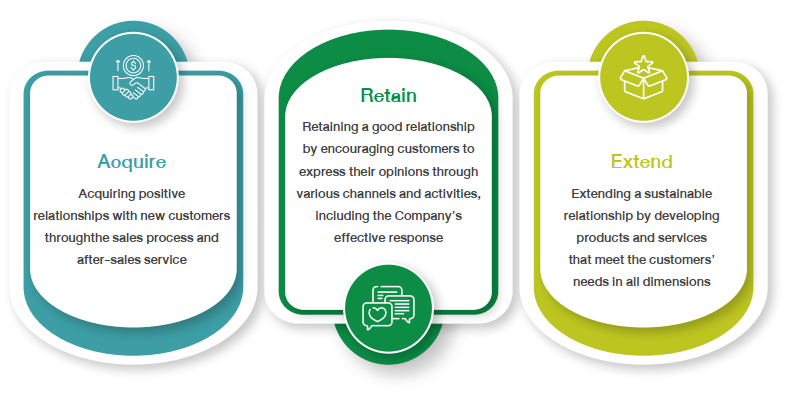
Plan Areas
| Plan Area | Other — Please Specify |
|---|---|
| Responsible production and services for customers | |
| Development of customer satisfaction and customer relationship | |
| Others | Customer Safety, Customer Complaint Management |
Customers — Satisfaction Results
Customer Satisfaction Results
| Metric | Current Year | Previous Year | Two Years Ago |
|---|---|---|---|
| Evaluation results of customer satisfaction | 1 | 1 | 1 |
Customers — Targets
Has Set Customer Targets
Yes
Targets
| Indicator | Target Areas | Target Year | Target Year — Description |
|---|---|---|---|
| Customer satisfaction score towards the Company, surveyed by the Industrial Estate Authority of Thailand | 3009 · Description: Development of customer satisfaction and customer relationship | 2,025 | Above 90% |
| Customer complaints resolved within the specified timeframe | 3011 · Other name: Customer complaints · Description: Other | 2,025 | 100% |
Customers — Performance & Outcomes
Has Performance Results
Yes
Performance Description
1) Customer Safety
The Company places a strong emphasis on safeguarding industrial customers operating in AMATA Industrial Estate through effective safety management in common areas and robust emergency preparedness and response. Potential emergency risks within the industrial estate are regularly assessed and reviewed to ensure that appropriate preventive and response measures are in place. Furthermore, the Company has not only established a fire station according to the regulations of the Industrial Estate Authority of Thailand on Utilities Systems, Facilities, and Service Standards for Eco-Industrial Estate (B.E. 2557, 2014) but has also established two Emergency Response Centers in AMATA City Chonburi Industrial Estate and one Emergency Response Center in AMATA City Rayong Industrial Estate. All Emergency Response Centers are operated by competent firefighters and disaster relief specialists who have received legal training and can be reached 24 hours a day via their direct phone lines, ensuring timely access to assistance in the event of emergencies.
In addition, the Company anticipated the possibility of emergencies such as fires and chemical leaks inside factories in the industrial estates, which are beyond the Company’s management authority. The Company, therefore, established an industrial firefighting school to provide training services in both theory and practice on safety, occupational health, a good working environment, and fire prevention and suppression in the workplace to the factories located in AMATA City Chonburi Industrial Estate and AMATA City Rayong Industrial Estate, in order to promote both industrial estates as safe areas with the occupational health and working environment required by law and to ensure that the employees working in the establishments can respond properly in the event of a fire in their workplaces. Such preparedness contributes to reducing the severity of emergency incidents and mitigating potential impacts on life and property for operators, employees, and other relevant stakeholders.
In 2025, the Company responded to a total of 10 fire incidents involving customers across both industrial estates. In all cases, the Emergency Response Centers provided timely responses within the specified response time of 8 minutes. No incidents resulted in significant impacts on surrounding communities or common areas of the industrial estates, and no injuries or fatalities were reported. Following each incident, the Company worked with the relevant operators to investigate the causes of each incident and provided recommendations to strengthen preventive and emergency response measures in order to reduce the likelihood of recurrence. In addition, the Company implemented the following safety and occupational health promotion activities within the AMATA industrial estates:
The Company had organized basic firefighting, fire evacuation drills, and other safety-related training for the factories in both industrial estates, both onsite and online, with a total of 948 training sessions with a total of 145,881 factory employees completing the training, representing an increase of 16.8% compared with the number of participants trained in 2024.
The Company, in collaboration with the offices of AMATA City Chonburi Industrial Estate and AMATA City Rayong Industrial Estate, organized an on-site and online emergency control drill (chemical leaks, gas leaks, and fires) for the year 2025 to enhance the staff of the Emergency Response Centers in responding to emergencies and to develop expertise in operations, communications, equipment use, and so on, in order to control and mitigate incidents for factory operators and people in nearby areas in a timely manner. A total of 160 participants from 13 companies took part in the drills.
In collaboration with the Chonburi Provincial Labor Protection and Welfare Office and the Occupational Safety Center Region 11, the Company organized a seminar entitled “Compliance with the Ministerial Regulation on Licensing of Safety, Occupational Health, and Working Environment Professionals B.E. 2567 (2024)” on 16 February 2025 for operators in AMATA City Chonburi Industrial Estate. A total of 78 companies participated in the seminar, with 78 attendees in total. The objective of the seminar was to equip participants with the knowledge, skills, and qualifications required by law to apply for certification as Safety, Occupational Health, and Working Environment Professionals, and to enable them to effectively perform duties related to hazard identification, risk assessment, and safety planning within their organizations in compliance with applicable regulations.
In collaboration with the Industrial Estate Authority of Thailand (IEAT), the Chonburi Provincial Disaster Prevention and Mitigation Office, and the Department of Geoinformatics, Faculty of Humanities and Social Sciences, Burapha University, the Company organized a seminar entitled “Effective Emergency Preparedness for Earthquake Situations for Business Establishments” on 25 April 2025 for operators in AMATA City Chonburi Industrial Estate. The seminar aimed to enhance participants’ knowledge, understanding, and preparedness in responding to earthquake-related emergency situations, thereby helping to reduce potential impacts on life, property, and business operations. A total of 146 companies participated in the seminar, with 162 attendees in total.
2) Customer Complaint Management
The Company has provided various easy-access channels for receiving customer complaints and developed a Customer Complaint Management System in accordance with the ISO 14001:2015 standard for its customers to inform the Company directly and receive resolutions within the specified period.
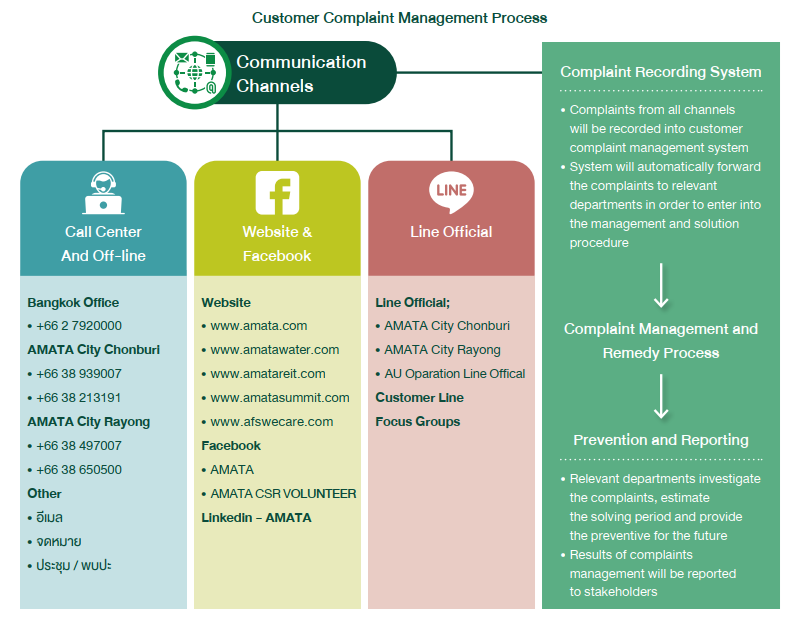
In 2025, the Company received a total of 416 complaints related to utilities and services. Among these, 167 complaints were related to issues with raw water, tap water, and wastewater management, accounting for 40.14% of total complaints. This was followed by 103 complaints related to traffic issues (24.76%), 87 complaints concerning solid waste management (20.91%), and 59 complaints related to basic utilities (14.18%), respectively. All complaints were resolved within the specified timeframe and responses were provided to customers in 100% of cases.
3) Customer satisfaction
The Industrial Estate Authority of Thailand (IEAT) conducts an annual customer satisfaction survey across 46 industrial estates nationwide. The survey evaluates seven key areas: 1) products and services, 2) pricing for land sales, leases, maintenance fees, water, and other service charges, 3) customer service points, 4) communication channels, 5) staff quality, 6) service processes and procedures, and 7) the physical environment within the industrial estates.
In 2025, the survey results showed that AMATA City Chonburi Industrial Estate received an average satisfaction score of 95.4%, while AMATA City Rayong Industrial Estate achieved 93%, both exceeding the Company’s target of 90%.
Additionally, to obtain more detailed insights into customer satisfaction within the AMATA Industrial Estate, the Company conducted a customer satisfaction survey annually through questionnaires and direct interviews with the Company's staff. The Company also held a meeting with high-level executives of factories and entrepreneurs in each industry to learn about the changing trends in customer needs in the future as well as the customers’ problems and concerns that require support from the Company, such as products and services related to climate change and coordination with government agencies regarding rules, regulations, and restrictions that hinder today's ESG-focused business practices.
In 2025, the Company conducted a customer satisfaction survey in both AMATA Industrial Estates, covering 10 aspects related to products and services: 1. Water and wastewater management; 2. Roads, traffic signals, signs, and streetlights; 3. Safety and security; 4. Emergency preparedness and crisis management; 5. Public and green space management; 6. Waste management; 7. Telecommunication and internet services; 8. Industrial estate services to meet stakeholders' needs; 9. The Company’s employee services 10. Communication channels and activities. The survey also covered customers’ needs and expectations, enabling the Company to use the insights gained to identify opportunities for service and product development, as well as to guide its operations so that it can respond more effectively to customer needs.
The customer satisfaction scores for AMATA City Chonburi Industrial Estate and AMATA City Rayong Industrial Estate were 79.9% and 81.5% respectively, both representing an increase from 2024. Moving forward, the Company plans to enhance its customer relationship management processes by establishing more diverse and specific customer communities to closely monitor customer needs and expectations. Additionally, efforts are underway to improve the efficiency of complaint management processes to elevate product and service satisfaction levels.
The results of the customer satisfaction survey, including issues and feedback gathered from both the Industrial Estate Authority of Thailand (IEAT) and the Company’s own assessment, were presented in the Company's executive meetings for consideration in improving and enhancing the Company’s products, services, and operational processes to increase overall efficiency. In 2025, the Company implemented improvements and developments initiatives in a number of in key areas identified through the survey results. It also placed importance on providing customers with regular updates on progress so that they were clearly informed of the actions being taken, implementation plans, and expected timelines for improvement. Examples of these actions are set out below.
Examples of concerns or recommendations from the Company's 2025 customer satisfaction survey | The Company’s Responses |
| The Company implemented improvements to enhance security measures for telecommunications towers within the industrial estates, including the following actions:
|
| The Company implemented measures to reduce traffic congestion and enhance safety within the industrial estate areas, including the following:
|
| The Company implemented measures to enhance the safety of life and property within the industrial estate areas, including the following:
|
Community & Social — Plan & Guidelines
Has a Community & Social Plan
Yes
Plan Description
The Company has developed industrial estates to support the expansion of the industrial sector, which is the foundation of the country's economic growth. While the growth of industrial estates will have both positive and negative impacts on society and local communities in economic, environmental, and safety aspects that directly affect people’s health and quality of life in local communities. The Company has determined to create a stakeholder participation process in various forms for the stakeholders within and around AMATA Industrial Estates to express their concerns, problems, and needs in order to develop AMATA Industrial Estate into a perfect city where surrounding local communities can happily co-exist and create shared values.
AMATA has been developing three industrial estates in Thailand that span over 70 square kilometers and are spread over the provinces of Chonburi, Chachoengsao, and Rayong. More than 1.42 million people are working in the industrial estates and living in the surrounding communities that are directly affected by the Company's operations. The Company, therefore, places importance on the supervision of the local communities located within a radius of 5 kilometers from the AMATA Industrial Estates and has established a management approach to social impact management and community development as follows:
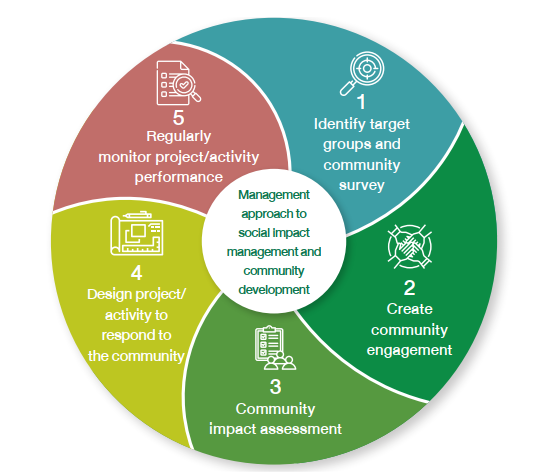
The Company has established several community committees to receive and respond to problems, community expectations, and suggestions for better improvement, as well as to provide information and swiftly address complaints, in order to help the Company's major stakeholders, namely communities and the government agencies that regulate it, gain a better understanding of its operations and foster engagement, trust, and confidence.
The established committees comprise of Tripartite Committee, or committee whose members are representatives of communities, government agencies, and the Company, the Committee for Surrounding Community Development, the Eco-Green Network, etc. Each committee is responsible for the growth of the neighborhood surrounding the Company's two industrial estates as well as for resolving any issues or grievances brought up by the neighborhood regarding the Company's operations.
Plan Areas
| Plan Area |
|---|
| Employment and professional skill development |
| Education |
| Religion and culture |
| Forests and natural resources |
| Sports and recreation |
| Occupational health, safety, health, and quality of life |
| Water and sanitation management |
Community & Social — Targets
Has Set Community & Social Targets
Yes
Targets
| Indicator | Target Areas | Target Year | Target Year — Description |
|---|---|---|---|
| Community satisfaction score surveyed by the Industrial Estate Authority of Thailand | 3045 · Other name: Community satisfaction · Description: Others | 2,025 | Above 85% |
| Community satisfaction score surveyed by the Industrial Estate Authority of Thailand | 3045 · Other name: Community satisfaction · Description: Others | 2,030 | Above 95% |
Community & Social — Performance & Outcomes
Has Performance Results
Yes
Performance Description
1) Community Safety
Both AMATA Industrial Estates have more than 1,386 factories and tenants, with approximately 310,000 people working in these areas and over 1,108,788 residents in the surrounding communities (Source: Basic Data for Local Administrative Organization Development Planning in Chonburi and Rayong Provinces; and Municipality/ Subdistrict Administrative Organization Websites). According to a survey on the negative impacts resulting from business operations, road safety, and traffic congestion emerge as major concerns for all key stakeholder groups. This is due to the layout of the AMATA Industrial Estates, where multiple public roads intersect with the estate roads, directly affecting factory owners, employees, and community members commuting through the area, resulting in traffic congestion and road accidents.
In 2025, The survey on road usage within AMATA industrial estates found that AMATA City Chonburi Industrial Estate accommodates over 238,252 vehicles daily. These include approximately 37,042 employee shuttle buses, 112,160 private cars, and 89,050 motorcycles. Meanwhile, AMATA City Rayong Industrial Estate records over 103,575 vehicles per day, comprising around 2,160 employee shuttle buses, 40,684 private cars, and over 60,731 motorcycles. This high volume of traffic poses a significant risk of road accidents.
Concerning road safety and traffic congestion, the Company has implemented strict traffic control measures and has set up committees to solve traffic problems in both industrial estates. The committees consist of representatives from both central and local government agencies, as well as factory operators in industrial estates, to collectively brainstorm ideas and jointly develop a traffic management plan to solve traffic congestion during rush hours and ensure road safety both within AMATA Industrial Estates and adjacent areas using the "6E Concept" under the ‘Safety City, Smart City’ project.
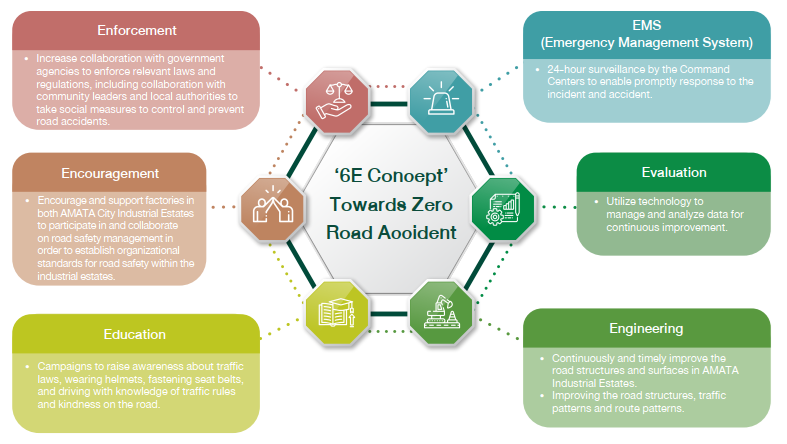
The Company has set a goal to reduce all types of accidents and fatalities in AMATA industrial estates by 50% compared with 2024.
In 2025, the Company expanded the scope of accident data collection to include AMATA City Rayong Industrial Estate in order to enhance the completeness of safety reporting. As a result, historical data for the years 2022–2024 were restated to align with the new reporting boundary, thereby enabling appropriate year-on-year comparison.
Based on the implementation of the 6E Concept under the Safety City, Smart City initiative, performance results for 2025 indicate that a total of 1,168 accidents occurred across the two AMATA Industrial Estates, resulting in 671 injured persons and 9 fatalities. Compared with 2024, the number of accidents and fatalities increased by 17.2% and 12.5%, respectively. Analysis of the data indicates that the increase in accident occurrences was primarily associated with road-user behavior, including speeding, careless driving, unsafe lane-cutting at close distances, and driving under the influence of alcohol. In addition, ongoing road and public utility construction in areas adjacent to the AMATA Industrial Estates has resulted in traffic diversions through the industrial estate areas. This has led to increased traffic density within the industrial estates and elevated road safety risks, which may have contributed to the observed increase in accident incidents.
In response to the above situation, the Company has continuously implemented measures to reduce accident risks and enhance road safety within the industrial estate areas. These measures focus on engineering improvements and traffic management at high-risk locations. Key actions include the repair of damaged road structures and surfaces, optimization of traffic patterns, installation of speed-reduction devices, additional traffic signage and safety equipment, enhancement of street lighting in high-risk areas, and realignment of road curves to reduce blind spots. In addition, guardrails and road barriers have been installed at identified high-risk points to help reduce both the likelihood and severity of accidents and to enhance overall traffic safety within the industrial estates. In parallel, the Company has implemented awareness-raising and enforcement measures in cooperation with local traffic police, including the establishment of traffic checkpoints to strengthen road discipline and promote safe driving behavior within the industrial estate areas. The Company also promotes collaboration with customers and surrounding communities through safety-related initiatives, such as joint road-marking activities within the estates and safe-driving campaigns conducted in collaboration with local communities, with the objective of fostering safe driving behavior and reducing losses from road traffic accidents.
Furthermore, the rapid growth of the AMATA Industrial Estates has led to the rapid expansion of surrounding communities and a dense population due to people relocating to work in the estates. This has created risks in terms of fire safety. The Company has thus prepared both personnel and equipment to always be ready to assist the community and has provided basic firefighting knowledge to schools and communities. In 2025, the Company's Emergency Response Center, staffed by legally trained specialists in firefighting and disaster relief, assisted in extinguishing fires in communities surrounding the industrial estate 24 times, including 7 times in communities surrounding AMATA City Chonburi Industrial Estate and 17 times around AMATA City Rayong Industrial Estate. In this regard, the Company supported all fire suppression expenses, which amounted to 192,000 Baht.
2) Community and Social Development
Based on the "ALL WIN" philosophy, which has always been adhered to as a principle of business operations by the Company, and the Company's goal of strengthening business growth along with sustainable community and social development, the Company has established a key strategy of sustainability connected with communities and society. This strategy focuses on cooperation among the Company, communities, customers in industrial estates, and government agencies. In addition, the Company has adopted the UN Sustainable Development Goals (SDGs) as a guideline for community development. The Company has established an operational framework for community development in five dimensions and has set a goal for community satisfaction scores towards AMATA, which must not be less than 85% in 2025.
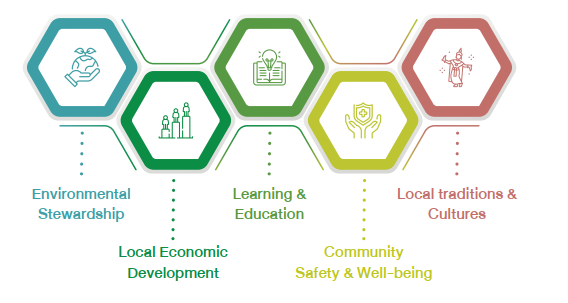
In 2025, the Company implemented a total of 31 projects and activities with a social investment budget of 8.20 million Baht (excluding donations). These activities attracted 30,759 participants and directly or indirectly benefited more than 77,896 people.
AMATA City Chonburi | AMATA City Rayong | |||
Communities (subdistricts) | Factories in the industrial estate | Communities (subdistricts) | Factories in the industrial estate | |
Target groups* | 31 | 862 | 10 | 524 |
Number of participated communities/ factories | 31 | 348 | 6 | 144 |
Percentage of participated communities/ factories | 100% | 40.37% | 60% | 27.48% |
Number of participants (persons) | 17,124 | 13,635 | ||
Social investment (million Baht) in 2025 | 4.84 | 3.36 | ||
*Target communities exceed the number of communities in the Company's development area
1st Dimension: Local Economic Development |
Promoting trade between the factories in both AMATA Industrial Estates and the local communities as well as providing a long-term market opportunity for the local communities, especially for agricultural products, and processed goods. This also creates sustainable growth for the local economy, while the buyers receive fresh and quality products directly from the producers.
Promoting the local economy, generating income from supplementary occupations, and helping reduce household expenses in communities around the AMATA industrial estate. |
2nd Dimension: Environmental Stewardship |
By using the Company’s expertise and experience in water and waste management to develop the model community’s pilot project and to provide knowledge and understanding to the community about proper solid waste disposal and sorting according to the 3R’s principles in order to utilize waste efficiently and create value according to the circular economy principle, this helps reduce the impact on the community and the environment, especially on community water resources, of littering and releasing household wastewater into the water resources.
By sharing the Company’s expertise and experience in water management to help Khao Yai National Park improve its wastewater management, we can ensure that water resource quality, both inside and outside the park, will not be negatively affected by tourists’ and park rangers’ usage. |
3rd Dimension: Community Safety & Well-being |
The Company is addressing road infrastructure issues and optimizing traffic lane designs while actively promoting compliance with traffic laws. Awareness campaigns focus on helmet use, seatbelt use, legal driving practices, and fostering courteous behavior on the road. A proactive approach is being taken through traffic safety education programs, aimed at raising awareness within the industrial estate, surrounding communities, and local schools
One of the objectives of the Company's Khru-Arsa AMATA project is to educate students and teachers on self-care during emergencies and to equip them with skills in using various types of fire extinguishers correctly and effectively, which can reduce the loss of life and property in emergencies.
To be a reserve blood source for the Thai Red Cross Society, the Company targets to donate at least 1 million cc of blood to the Thai Red Cross Society by organizing continuous activities annually. In 2025, the Company successfully provided 3.68 million cc of blood reserves to the Thai Red Cross Society. This total comprised 3,250,000 cc from AMATA City Chonburi Industrial Estate and 432,100 cc from AMATA City Rayong Industrial Estate. Over the past 14 years, the cumulative volume of blood donations has reached 33.38 million cc.
Sports matches aim to strengthen unity, sportsmanship, and good morale among athletes within and outside the industrial estate community. Additionally, they support and promote sports skills and abilities among youth, utilizing leisure time for beneficial purposes, and promoting strong physical health. |
4th Dimension: Learning & Education |
A collaboration between the factories in AMATA City Rayong Industrial Estate aims to encourage the students to engage in practical mushroom cultivation and vegetable plantation activities. These vegetables are used in preparing school lunches, which helps reduce costs. Any surplus quantity can be sold to generate extra income for the school. Additionally, this initiative serves as an educational opportunity to learn about the Sufficiency Economy, following in the footsteps of His Majesty King Rama IX.
In collaboration with the AMATA City Chonburi CSR Club, the AMATA Volunteer Club in Rayong, and the Industrial Estate Authority of Thailand, the Company has implemented a school development project in Chonburi and Rayong. The initiative includes renovating medical rooms, improving school libraries, and organizing activities to enhance students’ access to quality education. Additionally, the project focuses on developing sports and English language skills, as well as providing basic fire safety training for students.
The project collaborates with the factory operators within AMATA City Chonburi Industrial Estate and AMATA City Rayong Industrial Estate to support the strengthening of general knowledge and skills among youth through the 'Reduce Study Time, Increase Learning Time' curriculum. The activities were organized for primary school students in grades 4-6 across three schools in Chonburi and Rayong provinces. |
5th Dimension: Local traditions and Cultures | A collaboration between the Industrial Estate Authority of Thailand, the factories in both AMATA City Industrial Estates, and their surrounding communities in continuously participating in and supporting the local traditional and cultural activities of the communities. |
3) Community Satisfaction
The Industrial Estate Authority of Thailand conducts an annual survey to assess community satisfaction with industrial estates across the country, covering 46 locations. In collaboration with the Company, a survey was conducted to gauge the satisfaction of communities surrounding both AMATA industrial estates. In 2025, AMATA City Chonburi Industrial Estate achieved an average satisfaction score of 94.6%, while AMATA City Rayong Industrial Estate received an average satisfaction score of 93.6%, exceeding the target of 85%.
Furthermore, the Company’s Community Relations and Social Responsibility Working Committee has conducted on-site in-depth interviews to understand community concerns and expectations regarding the Company. This information serves as a foundation for planning future initiatives. Coupled with that, the annual satisfaction survey was conducted among communities surrounding both AMATA Industrial Estates, namely, AMATA City Chonburi Industrial Estate and AMATA City Rayong Industrial Estate. The committees collaborated with the Faculty of Communication Arts at Sripatum University's Chonburi Campus to conduct an in-depth study of community needs and expectations, as well as a survey on the community's satisfaction with the Company's community development projects. In 2025, the survey results revealed an average satisfaction score of 92.4% for AMATA City Chonburi Industrial Estate and 94.4% for AMATA City Rayong Industrial Estate.
The Company has gathered community feedback from satisfaction assessments conducted around both AMATA industrial estates, integrating insights from both the Industrial Estate Authority of Thailand and internal evaluations. These insights have been analyzed to inform strategic planning for community engagement initiatives, ensuring alignment with social responsibility commitments and fostering sustainable local development in the coming year.
Other Social Management
Plan & Outcomes — Description
Supplier and Contractor Management
The Company procures products and services from suppliers and contractors for the main activities of industrial estate business operations and the work that supports the management of industrial estates. As a result, product quality and the work of partners and contractors have a direct impact on the Company and its stakeholders, both positively and negatively, in the areas of economics, the environment, and the safety of people and property. Without a good audit process, the Company’s suppliers and contractors may contribute to labor and human rights violations. Effective supplier and contractor management will help the Company reduce risks and social and environmental impacts in its supply chain both in the short term and in the long term, as well as increase the quality and efficiency of its work and screen suppliers and quality contractors for long-term mutual growth. Therefore, the Company has conducted the following:
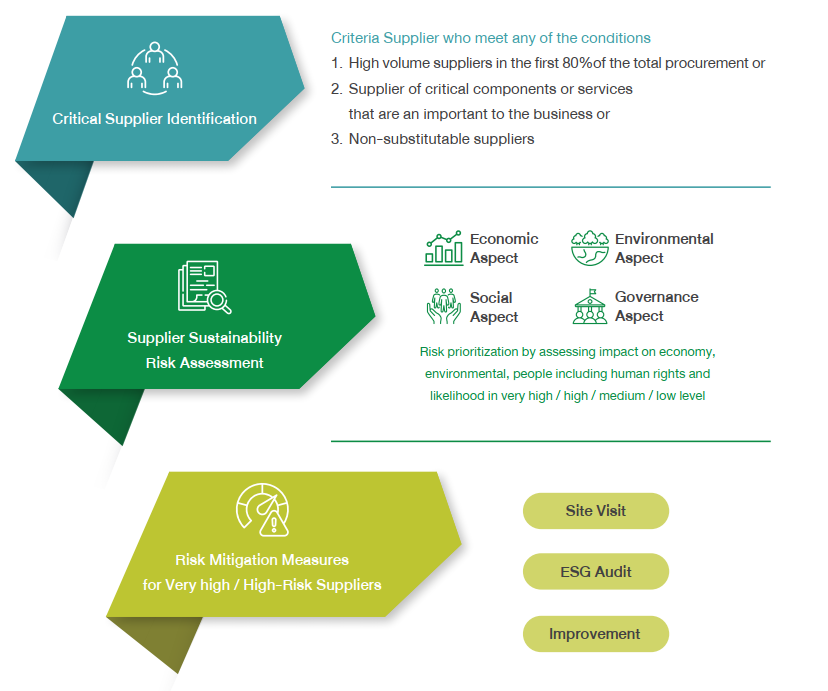
Critical Suppliers Analysis
In 2025, the Company had a total of 473 tier-1 suppliers and contractors in its supply chain who maintained ongoing direct business relationships with the Company. An analysis identified 53 suppliers and contractors as critical tier-1 suppliers, accounting for 85.45% of the Company's total procurement value. These critical suppliers are categorized into three key business segments: 15 suppliers in the real estate and leasing sector; 15 suppliers in the utilities and services sector; and 23 suppliers in the goods and services sector. The procurement value is distributed across these segments at 28.30%, 28.30%, and 43.40%, respectively, the Company identified 64 critical non-tier-1 suppliers, who are essential to the supply chain but do not have direct business transactions with the Company.
Supply Chain Risk Assessment
The Company established targets for all critical tier-1 suppliers and new suppliers to undergo evaluations for economic risks and sustainability risks, encompassing environmental, social, and governance aspects. In 2025, the risk assessment was carried out on all 53 critical tier-1 suppliers (100%) and 59 new suppliers (100%) as targeted. The assessment results indicated that no critical tier-1 suppliers or new suppliers were identified as having high or very high risks in the areas of social, environmental, economic, or governance performance. For one supplier that had been identified as having high social and environmental risk in 2024, the Company conducted an additional on-site assessment, provided recommendations for improvement, and closely monitored the implementation of corrective actions. In 2025, the supplier fully implemented the agreed improvement plan, and the follow-up assessment confirmed that the associated risks had been reduced to an acceptable level.
2021 | 2022 | 2023 | 2024 | 2025 | |
Proportion of products and services purchased in Thailand | 100% | 100% | 100% | 100% | 100% |
Total number of tier-1 suppliers | 932 | 527 | 654 | 732 | 473 |
Total number of critical tier-1 suppliers | 71 | 85 | 63 | 51 | 53 |
Total number of critical non-tier-1 suppliers | NA | NA | 24 | 18 | 64 |
Total number of new suppliers | 8 | 11 | 52 | 89 | 59 |
Proportion of suppliers and contractors assessed for ESG risks by using Self-Assessment Questionnaire (SAQ) | |||||
| 100% | 100% | 100% | 100% | 100% |
| 100% | 100% | 100% | 100% | 100% |
Number of suppliers and contractors with high and very high ESG | |||||
| 0 | 1 | 0 | 1 | 0 |
| 0 | 0 | 0 | 0 | 0 |
Suppliers On-site Audit
The Company requires all critical suppliers and contractors that have already passed the economic and sustainability risk assessment by using the Self-Assessment Questionnaire (SAQ) to have an audit on the economic, environmental, social, and governance topics at their workplaces (on-site ESG audit). The patterns and frequency of the on-site ESG audit depend on the risk level. The critical suppliers with high and very high risk will have an on-site audit as soon as possible; those at moderate risk will be audited once a year; and those at low risk will be audited every two years. The auditing items are set according to the Company’s criteria and the environmental management system (ISO 14001) standards and will be conducted by examining relevant documents and an on-site audit by the AMATA Procurement Working Committee.
Risk Level | Control and Risk Monitoring Measures |
Low |
|
Medium |
|
High |
|
Very High |
|
In 2025, the Company had 18 critical suppliers required to undergo on-site ESG audit according to the established criteria. The Company successfully completed the audits for all 18 suppliers (100%).
2021 | 2022 | 2023 | 2024 | 2025 | |
The total number of suppliers required to undergo on-site ESG Audit | |||||
The audit completion ratio for critical tier-1 suppliers during the year | 0 - | 11 100% | 22 100% | 21 100% | 18 100% |
| 0 | 0 | 0 | 0 | 0 |
Additionally, the Company mandates that suppliers and contractors who have business transactions with the Company undergo an annual performance evaluation and relationship assessment following the delivery of their goods or services. The results will be taken into account for the subsequent procurement.
The Company has implemented risk management measures for each supplier and arranged supplier development activities to reduce the likelihood of risk and the impact of such risks. However, the Company has not yet terminated business relationships with any assessed suppliers or contractors (0%).
Contractor Occupational Safety
The Company has prioritized the occupational health and safety of both the Company's and its customers' contractors who work in the Company's operating areas. Therefore, the Company has informed the contractors of its safety and occupational health policies, as well as guidelines for various measures related to their operations in both AMATA industrial estates, by arranging meetings to clarify these policies to the Company's and customers' contractors, as well as reiterating to the contractors their strict compliance with labor laws and occupational health and safety. However, the Company’s employee in charge of the project will be responsible for supervision of the contractor’s operation, and if a work-related accident causes Lost Time Injury (LTI), the contractor must notify the Company of its acknowledgement.
In 2025, the Company assessed the occupational safety risks of suppliers and contractors, encompassing standard operations and supervision of occupational health and safety for their employees. Additionally, the Company organized safety training and emergency drills for contractors, including workplace safety and operational risk awareness training, solid-waste spill response drills for employees responsible for waste transportation and segregation at the waste-sorting facility, and basic fire-fighting and fire evacuation training for contractors’ employees working within the Company’s premises. These activities were complemented by regular contractor meetings to monitor performance and communicate relevant policies, with a particular emphasis on reinforcing the importance of occupational health and safety in day-to-day work practices.
The Company regularly monitored and inspected the progress of rental factory construction projects within the industrial estates carried out by its contractors to ensure compliance with construction standards, occupational health and safety requirements, applicable laws and regulations, and the Company’s internal policies. In addition, the Company organized workshops in collaboration with suppliers and contractors to enhance after-sales service systems, as well as the management of repair and maintenance activities for rental factory facilities. These initiatives aim to promote safe and high-quality operations and to build long-term confidence among customers and other relevant stakeholders.
In 2025, none of the contractor's employees had a work-related accident resulting in Lost Time Injury (LTI) or Fatality, and the Lost Time Injury Frequency Rate (LTIFR) of the contractor's employees who worked on the Company's premises was equal to 0 per million working hours.
Suppliers and Contractors Development
The Company places importance on the development of suppliers and contractors across its supply chain, especially critical suppliers of utility and industrial services, to reduce social and environmental risks and impacts as well as compliance risks. It also encourages suppliers and contractors to improve their efficiency to align with the Company's standards, i.e., encourage the critical suppliers and contractors to develop management systems and obtain relevant international standard certifications, such as ISO 9001, ISO 14001, ISO 17025, and OSHA 18000.
Information Security and Data Privacy
Loss or leakage of the Company's and relevant stakeholders' personal and business information, whether caused by human error or cyber threats, has an unavoidable impact on system stability, the Company's reputation and image, and stakeholder confidence. If the information is used improperly, it can seriously harm the data owner and could result in financial cost to the Company’s customers and business partners. The Company has set an Information Security & Data Policy to ensure directors, executives, and employees comply with the guidelines for keeping information confidential and using information correctly. This includes sensitive information related to the Company or its stakeholders; with the IT security policy, which provides instructions on the use of computer and network systems in line with the personal data protection policy that complies with international standards and legal requirements such as the Personal Data Protection Act (PDPA).
The Company places importance on developing cyber security to maintain the security of the Company’s and key stakeholders’ information, including employees, customers, business partners, suppliers, and contractors. The Company therefore sets goals for cybersecurity operations and data security, such as having a data leakage prevention system that covers all business units (100%) and receiving no complaints about personal data leakage.
The Company focuses on reducing the likelihood and impacts of incidents and cyberattacks on its information technology system. A working group has been set up to review the security system’s structural architecture, identifying vulnerabilities in critical work systems, to ensure that sensitive components in every system are continuously monitored. The working group is chaired by Ms. Dendao Komolmas, Chief Financial Officer, and reports progress and key findings to the Risk Management Committee on a quarterly basis, as part of the Company’s enterprise risk management framework.
With regard to cybersecurity and information security, the Company has assigned the Information Technology Department to establish and implement cybersecurity control measures, oversee information security management practices, and monitor and respond to cyber threats. The Information Technology Department also provides guidance and support to business units and support functions on appropriate security management measures. Cybersecurity-related risks are reported to Mr. Satha Vanalabhpatana, Acting Chief Strategy Officer and Assistant to Chief Executive Officer, who is responsible for Enterprise Risk Management, as well as to the relevant committees. In addition, the Company places importance on raising information security awareness among employees through ongoing communication and training initiatives.
The Company requires data users to strictly adhere to the policy and terms of use, and it provides training on compliance measures to manage and maintain the security of personal information. The Company has raised awareness and provided a fundamental understanding of information security and cyber threat trends to executives and employees. This enables them to handle and use data safely, be cautious, and prevent cyber-attacks. Measures include securely using information technology systems requiring password-protected access and change the password regularly for a specified period.
In 2025, the Company organized two training programs related to cybersecurity and data protection and privacy, with a total of 230 participants, representing 77.18% of the Company’s total workforce. These training programs aimed to strengthen employees’ awareness of cyber threats and reinforce the importance of data protection and privacy, which require cooperation from all employees.
If a stakeholder identifies an incident where the operation does not comply with the regulations, a violation of personal data, or stakeholder information leakage, a trace or complaint may be filed through the Company’s complaints channel. In 2025, the Company did not receive any complaints related to the violation of personal data, the leakage of stakeholder information, or any incidents of Company information leakage or cyber-attacks.
Law Violation Incidents
Law Violation Incidents
| Metric | Current Year | Previous Year | Two Years Ago |
|---|---|---|---|
| The total number of cases or incidents of significant violations of laws or regulations regarding social and human rights (Cases) | 0 | 0 | 0 |
| The total number of cases or incidents that cause significant labor disputes (Cases) | 0 | 0 | 0 |
| The total number of cases or complaints related to consumer rights violations (Cases) | 0 | 0 | 0 |
| The total number of cases or complaints related to partner rights violations (Cases) | 0 | 0 | 0 |
| The total number of cases or incidents that cause disputes with the community/society (Cases) | 0 | 0 | 0 |
| The total number of cases or incidents related to cyber security or customer data breaches (Cases) | 0 | 0 | 0 |
| The total number of cases or incidents related to safety and occupational health at work (Cases) |